Turning Toward: The Small Moments That Shape Our Relationships
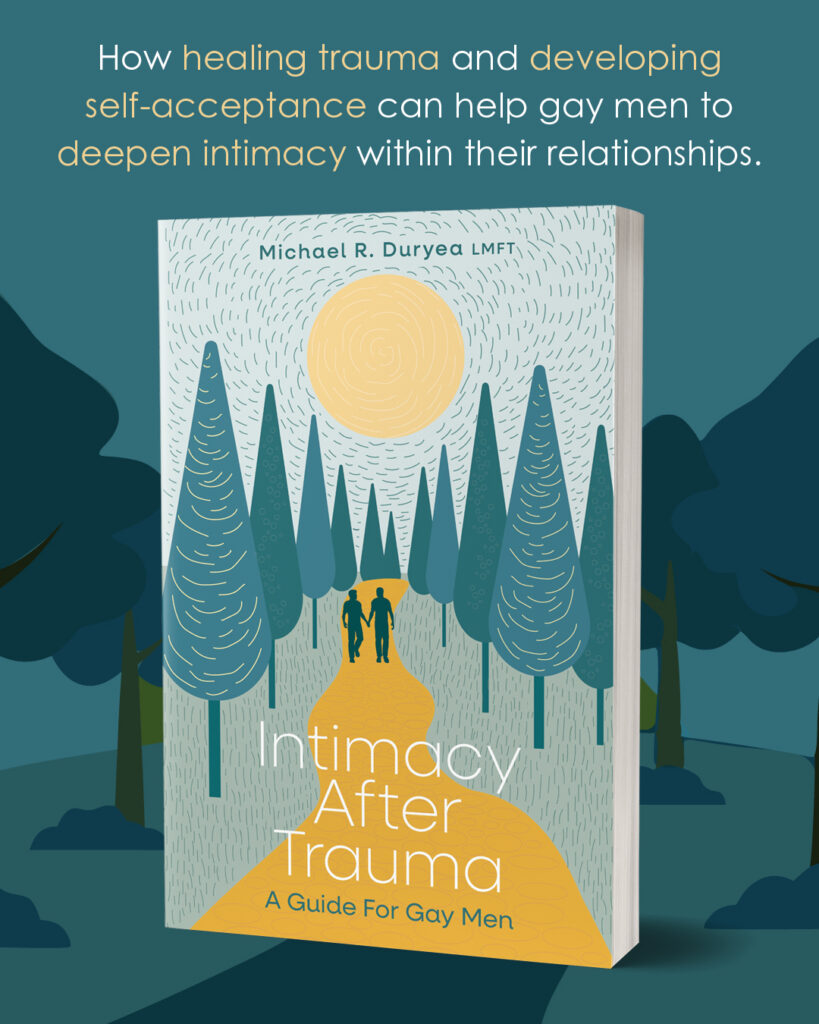
By Michael R. Duryea. Buy his new book, Intimacy After trauma, here.
There are quiet moments that happen in most relationships. It doesn’t look like much from the
outside. One partner says, “Look at this,” holding up their phone. The other nods without really
looking. Nothing explodes. No argument follows. But something small just passed between
them and was missed.
In Intimacy After Trauma: A Guide for Gay Men, I explore how these seemingly minor moments
often carry more weight than we realize, especially for those who have learned, in one way or
another, that connection isn’t always safe or that our needs might be too much.
What Are Bids for Connection?
This is where I draw upon the research of Drs. John and Julie Gottman, who offer something
both simple and profound. They call these moments “bids for connection.” A bid can be
anything:
- a question
- a joke
- a sigh
- a hand reaching out
- even silence that hopes to be noticed
It’s one person saying, in a small way, “Are you there with me?”
How We Respond Matters
According to the Gottmans’ research, relationships don’t thrive because of grand gestures. They
grow or weaken based on how partners respond to these bids in everyday life. There are three
common responses:
- Turning toward: acknowledging, engaging, responding
- Turning away: ignoring, missing, being preoccupied
- Turning against: dismissing, criticizing, rejecting
Over time, these responses create an emotional climate. Not in a single moment, but in the
accumulation. A partner who is consistently met begins to soften. A partner who is consistently
missed begins to pull back. Often, neither partner realizes it’s happening.
Why This Can Feel Bigger for Gay Men
For many gay men, these moments can carry additional weight. If you’ve grown up learning to
monitor yourself, read the room, or anticipate rejection, a missed bid isn’t just neutral. It can
echo something older:
- “I’m not seen.”
- “I’m too much.”
- “I shouldn’t need this.”
So the reaction isn’t always about the moment itself but about what it touches.
Turning Toward as a Practice
This is why turning toward isn’t just a communication skill. It’s a relational practice. It might look
like:
- pausing what you’re doing and making eye contact
- asking a follow-up question instead of letting something drop
- reaching back when your partner reaches for you
- noticing when they go quiet and gently checking in
Not perfectly. Not every time. But often enough that your partner feels you there. If you’re the
one making the bid, it also means allowing yourself to be visible, to risk the small reach, even
when part of you expects it might not land.
Where Change Actually Happens
In Intimacy After Trauma, I talk about how healing in relationships rarely happens through big,
dramatic change. It happens in these micro-moments, repeated over time. A turned head. A soft
“tell me more.” A hand that meets yours instead of staying still. These moments don’t just
maintain connection. They build it.
A Small Shift
So the next time your partner says something small, something easy to overlook, pause for a
second. Because it might not be small at all. It might be a doorway. Turning toward it is how
relationships grow.
Want to Go Deeper?
If this resonates, and you want a deeper understanding of how trauma, attachment, and
everyday moments like these shape connection, I explore this more fully in Intimacy After
Trauma: A Guide for Gay Men. The book offers both insight and practical tools to help you and
your partner build a relationship that feels more secure, connected, and alive. You don’t have to
get it perfect. Just begin by noticing the moment in front of you and choosing, when you can, to
turn toward it.
Michael Duryea is a Licensed Marriage and Family Therapist (LMFT) with a deep passion for assisting couples in navigating the complexities of their relationships by building effective communication and mutual understanding. His unique therapeutic approach is enriched by extensive training in EFT, Gottman, IFS, and CBT. Michael is also a mixed media artist whose work explores representations of the human psyche and relational dynamics. His book Intimacy After Trauma is out now.