The Hidden Side of PDA: Struggles Often Missed or Misunderstood
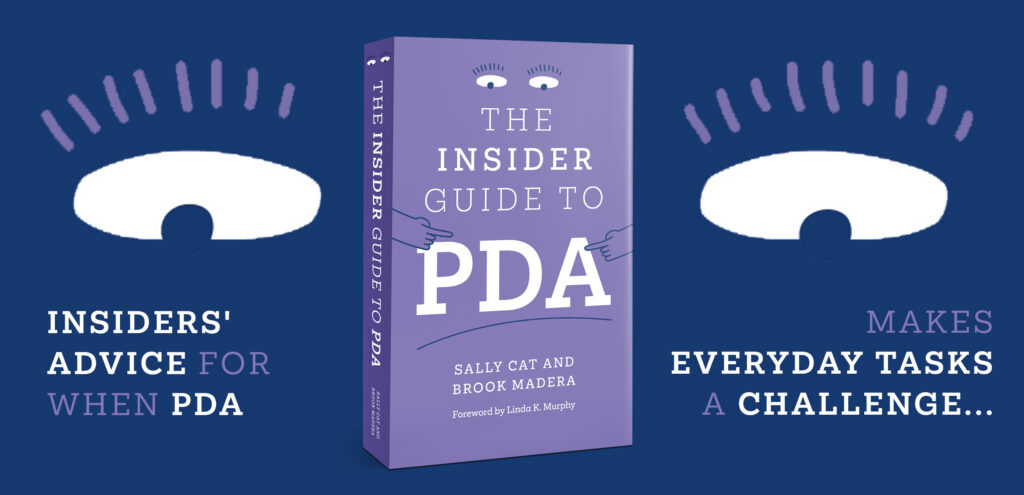
By Sally Cat and Brook Madera, co-authors of The Insider Guide to PDA
When families first stumble across PDA — pathological demand avoidance — they are usually already exhausted and frightened. So many parents we speak to have watched their children be passed from service to service, especially within the education system, only to see things get worse rather than better. By the time they find us, they’re often desperate for answers.
We wrote our book because the information out there about PDA is confusing, contradictory, and sometimes just plain wrong. As PDA adults raising PDA children ourselves, and after talking with hundreds of families, we’ve lived every side of this story. We wanted to cut through the noise and share what PDA really looks like in everyday life.
Most people only hear about what we call “externalized PDA” — the children who are loud, visibly distressed, bossing teachers around, melting down, and drawing attention wherever they go. But not all PDA looks like that. Some of it is hidden. We call this “internalized PDA,” and because it isn’t disruptive in obvious ways, it often slips completely under the radar.
Even when distress is on display, the real drivers are invisible. A teacher might see a child who is unsettled in class, snapping at peers or staff, and have no idea what is actually going on underneath. They start searching for labels: conduct disorder, oppositional defiant disorder, ADHD, bad parenting, attention seeking — we’ve even heard people joking about demonic possession. Anything but the truth.
When PDA isn’t openly expressed, the chances of it being recognized drop even further. The child who keeps it all inside doesn’t cause trouble, so no one looks deeper. But whether our PDA is loud or quiet, our brains are wired in a way that often gets us branded as “misfits.” With the right understanding and support, we thrive. Without it, our lives can spiral fast.
That might sound dramatic, but it’s not. We see the consequences all the time: teenagers dropping out of school, young people struggling with eating disorders, run-ins with the law, mental health crises, reliance on food banks — all judged as personal failures rather than signs of unmet needs. Our wiring simply puts more obstacles in our path. When people understand PDA and support it early, those outcomes don’t have to happen.
Internalized PDA isn’t weaker or milder, any more than an iceberg is smaller because most of it is underwater. The bulk of the struggle is hidden from view.
Many professionals still believe PDA is extremely rare, or that it’s just autism with demand avoidance, or ADHD in disguise. We think the opposite may be true: hidden PDA is probably far more common than anyone realizes. It’s just that only the externalized version tends to be noticed.
In our book, we set out to explain what PDA really is, the many ways it can be masked, what drives the behaviours people see, and — most importantly — how to support PDA in ways that actually work. We’ve blended clear explanations with our own lived experiences as PDA adults raising PDA children, because this story needs to be told by the people who are living it.
__________________________________________________________________________________________________
Sally Cat is a consultant, speaker, and leading expert on internalised PDA. She is the author of PDA by PDAers, Pathological Demand Avoidance Explained, Sleep Misfits, and Calendar Girl. Sally runs the Sally Cat Facebook page, which supports over 40,000 PDAers.
Brook Madera (No Pressure PDA) lives in Oregon and founded the non-profit, PDA USA. Brook runs the Facebook groups No Pressure PDA and PDA USA: Pathological Demand Avoidance. She has served as PDA North America’s liaison for PDA lived experience, and was a speaker for both their 2024-2025 conferences.