Helping Young People Explore Who They Are: Why I Wrote The Queerly Autistic Workbook
By Erin Ekins. Buy her new book, The Queerly Autistic Workbook, here.
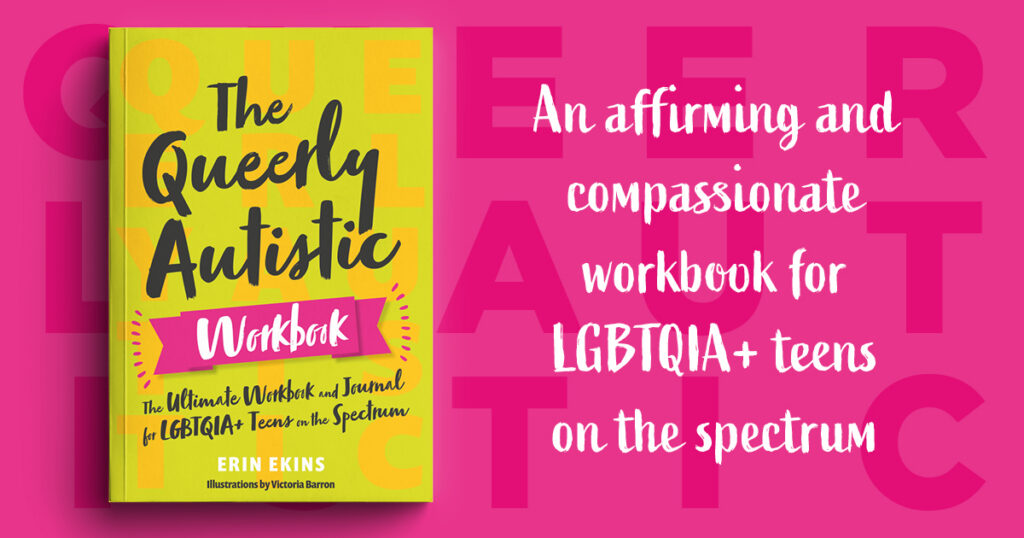
When I first wrote Queerly Autistic back in 2021, my goal was simple: write the book that I wish I’d had as an autistic teenager figuring out my identity.
So I wrote Queerly Autistic as though I was speaking to myself – using the words, the tone, and the care that I needed back then. This was the foundation of the book. After that was laid, I spoke to other autistic and LGBTQIA+ people and did as much research as I could, particularly in areas where I had less experience, to make sure that the book would work for as many young people as possible.
Since then, it’s been an incredible journey watching the book take its place in the world. The feedback I get, not only from young autistic queer and trans people, but also older autistic people and parents, makes every second of that long process worth it.
It’s also been amazing to watch the conversation around autism, gender and sexuality flourish. When Jessica Kingsley first commissioned me to write the book, there was a dearth of information and resources around gender and sexuality for autistic people. But since then, other books have been published, research has been done, and the intersection between autism and LGBTQIA+ identities has finally begun to be talked about on a larger scale.
Perhaps the biggest sign of this shift has come in the form of the growing number of autistic LGBTQIA+ characters in media. From Matilda and Drea in Everything’s Gonna Be Okay, to Lewis Barton in Emmerdale, all the way through to Shane Hollander in Heated Rivalry (who although not diagnosed in canon, has been explicitly described by the creators and actors as autistic) – the fact that these autistic characters are not only allowed to have a sexual and gender identity, but are explicitly portrayed as queer, represents a huge step forward.
When I take my book to pride events, I am approached by young people who proudly tell me that they are autistic and LGBTQIA+, without a hint of the shame I lived with for so long. And that alone is something world-changing to me.
Where, then, five years down the line, does The Queerly Autistic Workbook come into this?
The world may have shifted, and we may finally be having the conversations about autism, gender and sexuality, but that doesn’t mean things are easy for young autistic people trying to figure this out. Figuring out your gender and sexuality, coming out, transitioning, finding your place in the world – these are all things that many still struggle with. And although I know Queerly Autistic has helped many people, I felt that what was missing was a more practical, active resource for young people to use to help them through these aspects of life.
So, that’s what The Queerly Autistic Workbook is. These are books designed to work hand-in-hand: one providing information and guidance, and the other encouraging young people to take that information and apply it to their own lives and experiences. Queerly Autistic was about learning; The Queerly Autistic Workbook is about doing.
Indeed, working on the exercises, quizzes, research projects and other aspects of this book has even enabled me to explore aspects of my gender identity that I had never considered before – proving that it’s never too late to explore who you are.
And all of this has never felt more important than right now. For all the progress we have made, we are existing in difficult times. Whilst in many ways the world is easier, we are starting to see pushback on hard fought for progress. There is growing of hostility, both in society and in politics, towards LGBTQIA+ people – with particular cruelty currently being aimed at trans and gender diverse people.
In the face of this, it’s so important that people stand up. It’s important that we continue to tell the world ‘we are here’, and show young people that they have support, love and space to be themselves.
The driving force of all my work, since I started talking publicly about the intersection of being LGBTQIA+ and autistic, has been the belief that we owe it to the generations after us to make sure they have a better experience than we did.
And if The Queerly Autistic Workbook helps just one young person in these increasingly difficult times, then it has done everything I ever wanted it to do.
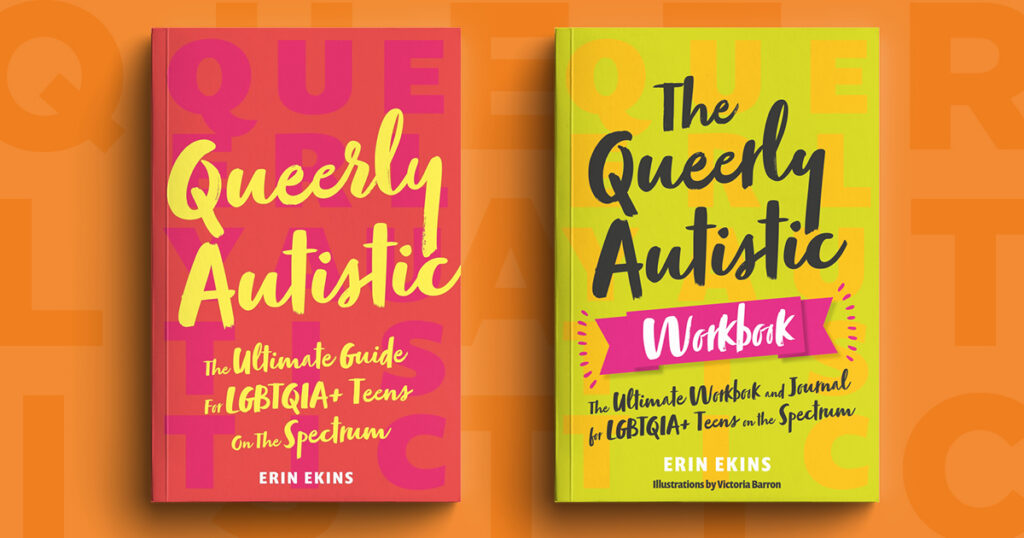
Erin Ekins is a queer autistic writer, speaker and the author of Queerly Autistic. She has written for publications including The Independent, Metro, Huck and Neuroclastic, and has appeared on the Victoria Derbyshire show, Radio 5 Live, the Channel 4 documentary ‘Are You Autistic?’ and more. Her new book The Queerly Autistic Workbook is out on 19th March 2026.