Video: Get the mouth AND body moving for best results in teaching communication skills
Lois Jean Brady, co-author with America X. Gonzalez and Jim Elliott of Speech in Action, was recently interviewed on the Autism Hangout about the book…
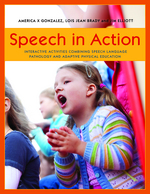
Lois Jean Brady, co-author with America X. Gonzalez and Jim Elliott of Speech in Action, was recently interviewed on the Autism Hangout about the book…

“I became increasingly more interested in Asperger syndrome and females as my daughter got older. I really wanted her to grow-up in a very informed culture, a place where women on the spectrum were seen as lovely beacons of light with precious insight to share. It seems to me we are only beginning to uncover the potential of the Aspie female.”

“My son is seventeen and is approaching the age of maturity. In an effort to prepare him toward an independent lifestyle (his goal as well), I knew we needed to build his life and community skills. I wanted him to feel confident in everyday tasks such as buying food, returning an item at the store, going to the bank, washing clothes, using public transportation or making himself a meal…”

“Although child protection professionals help keep many children safe – and it’s important to remember that the UK has one of the lowest rates of child homicide at the hands of their carers – nevertheless, they sometimes bring the wrong families into the system while missing others – not because they lack skill but as a result of gaps in our knowledge about what leads to maltreatment.”
By Maggie Kindred and Michael Kindred, authors of the new book 500 Tips for Communicating with the Public, which addresses the communication challenges that people…
“Rising Above Bullying is a book for all those who encounter bullying. For those who are being bullied and their families, for the perpetrators and their families and for teachers and other adults who are in a position of influence. And for the bystanders – those who ‘turn a blind eye’ thinking it is not their business. We all have a shared responsibility to ensure the safety of our children; adults must be proactive in putting a stop to bullying behaviour. This involves doing something if you believe a child is being subjected to unkind and unpleasant treatment.”
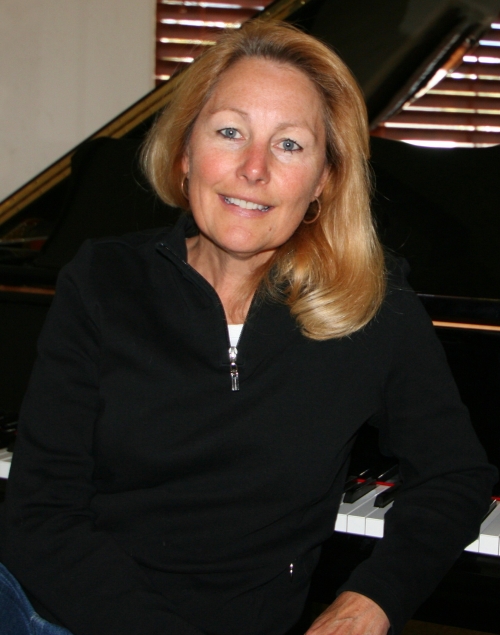
“Music is a medium that can be non-threatening, encourage participation, encourage attending skills, and encourage stimulation or relaxation. Because of these outcomes and more, music can be used to reach a child that may be hesitant to respond to other forms of communication.”
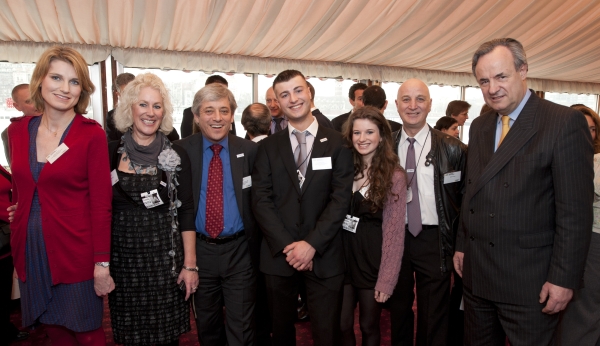
By Jan Greenman, author of Life at the Edge and Beyond: Living with ADHD and Asperger Syndrome. Last year my son Luke spoke to author…

This week, JKP attended the National Autistic Society (NAS) Professional Conference for the first time, and we are pleased to say that it was a resounding success!…

By Vanessa Rogers, youth worker and author of 101 Things to Do on the Street: Games and Resources for Detached, Outreach and Street-Based Youth Work.…