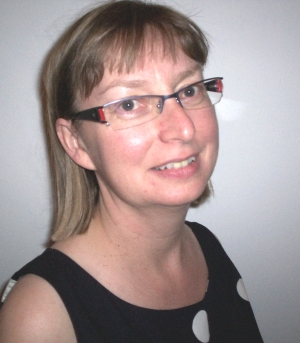
Photo: JKP author Rachel Fearnley

Supporting children when a parent is at the end of life – An Interview with Rachel Fearnley

“The news that a parent has a terminal illness generally presents the family with a huge crisis. Everything about family life is catapulted into a maelstrom, routines change and nothing appears to be predictable anymore. If children are not included in conversations about their parent’s illness and possible imminent death they are going to witness all the changes without having any ‘concrete’ knowledge to use as a marker. They will be aware of the changes and know that something is very different but will not be able to form a consistent narrative. As a result they are in danger of piecing together the information they have gleaned and making erroneous conclusions.”

Using CBT strategies to help young people “starve” their Anger Gremlin – An Interview with Kate Collins-Donnelly

“The biggest challenge for the young people themselves is when they are trying to work out how to deal with their anger in response to extremely difficult circumstances, which they have to contend with on a daily basis, such as cyberbullying, witnessing domestic violence in the home or witnessing parental substance abuse. Young people under these circumstances have such a right to feel angry, but the biggest challenge is to find a way to let go of that anger or to express it in a constructive way, especially when the options to move away from the difficult life issues are limited. “

Unlocking a child’s potential through vision therapy – An Interview with Dr. Joel Warshowsky

“Underachieving children typically don’t feel connected. The process of training children to reframe their visual connectedness with the world is not only about vision. It is about utilizing vision to reframe the relationship between children’s inner reality and their external reality. Vision is merely the vehicle, the classroom, the training ground. The true benefits accrue when a child, perhaps your son or daughter, takes what he or she has achieved in the safe and nurturing environment of therapy and applies it to the outside world. It is then that a child’s entire sense of who they are and what they are capable of, has been modified for the better.”

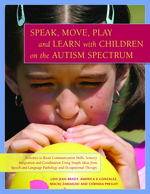
Combining ideas from SLT and OT to Speak, Move, Play and Learn with Children on the Autism Spectrum – An Interview with America Gonzalez and Corinda Presley

“The idea was born out of a spirit of collaboration that came up when we noticed that our students were working on similar projects but with an OT or SLP spin. Another way we came together was when the speech team would make quesadillas with the students to work on sequencing, vocabulary and describing goals. And the OT would say, “Can I jump into your activity to practice cutting the quesadilla into triangles with my student?” And so we began to purposely create activities around both OT and SLP goals. We recently found out that the University of California – San Francisco has built therapy rooms for the explicit purpose of the collaboration between therapists. This is a wonderful step towards collaborative therapy.”

Story Drama in the Special Needs Classroom – An Interview with Jessica Perich Carleton

“The formula (called the Dramatic Formula) in the book presents each step with a specific skill that the students need in order to succeed in the drama, while at the same time balancing the level of stimulation for the students so they can focus on each section. Structure and balance of stimulation are the two main factors which give this book success. These two elements allow the students to succeed in a safe and nurturing environment.”

Turning homework negatives into positives for students with AD/HD – An Interview with Harriet Hope Green

“The activities in the book capitalize on AD/HD traits because I use the traits as the vehicles to complete the task. AD/HD students like to move, so activities include jumping answers, and singing facts, and activities that are interesting enough to promote focus. The child is empowered to make tents, read on the floor, discuss emotions, and pop bubble paper.”

Yoga breathing techniques to help children deal with anger and stress – An Interview with Michael Chissick

“Looking back I think that one of the main factors that inspired me to turn the yoga play into a book was the feedback from the children. I have lost count of the amount of times that children would tell me how they had used the techniques to deal with incidents in their lives. Problems ranging from being angry at siblings who stole their sweets or broke their toys, to being the calming influence in big family arguments. My two favourites will always be: the nine-year old boy who was terrified of the dentist and who quietly sat in the waiting room, and ultimately the dentist’s chair, practising his Crocodile Breath to calm himself; and the ten year old girl, who was angry with her parents, who would go to her room and practice Woodchopper Breath every day for three weeks, who eventually came and told the class teacher and me that that she had Haaaa’d out her anger.”