Liz Hoggarth: Outcome evaluation – help is on the way

“Many of us react instinctively against further demands to produce evidence, especially quantitative information – we know all too well that progress with clients is made up of tiny, often faltering, steps forward that are extremely difficult to demonstrate or quantify. There are downsides to the outcomes approach as there are to other systems of planning and evaluation. But the question of outcomes is a perfectly legitimate one. The number of visits made to a family is beside the point if the risks are not picked up and appropriate interventions are not identified to begin to help people deal with the problems. The number of counselling sessions provided is hardly important if in the end they made no difference for the person seeking help. We must address outcomes in order to improve services.”

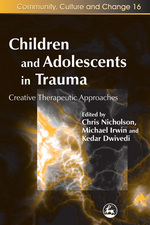
Chris Nicholson on Creative Therapeutic Approaches with traumatised young people

“Through sensitively handled, creative interaction and by the use of ‘creative’ approaches with traumatised young people their characteristic rigidity begins to loosen. New possibilities emerge, the mutative nature of create endeavours. In time, they may be able to see painfully familiar situations in different and helpful ways that can lead to their forming a new response.”

Kieran O’Hagan on Competence in Social Work Practice

“…why is it that a very small number of social workers who have striven so hard to qualify and who have demonstrably proven their competence at the end of their training fail to maintain it in practice? […] It certainly cannot happen overnight. The reports often expose terrible working conditions, e.g., inadequate supervision and resources, and unrealistic caseloads (and that’s even without mention of exceedingly difficult and often intimidating clients). All of these factors may adversely affect the worker’s level of performance, and in some cases, make it virtually impossible to maintain the level of competence already achieved in practice placements, and amply recorded and demonstrated in workers’ portfolio. Therein I believe, lies both the problem and the solution…”
Rhidian Hughes: “Restraint does nothing to address the underlying causes of people’s behaviour”

“…the United States was the first country to take a long hard look at the use of restraint and to develop a number of innovative restraint reduction and eradication approaches. […] Progress in other countries has followed, although at a different pace. Arguably the UK has lagged behind other countries in the attention afforded to this topic and the lack of domestic research has been criticised, a point made in the book…”

David Carson: What can Social Workers do to avoid being criticised – or sued?

“I had asked my social work students what additional topics they would like me to lecture upon. As a law lecturer I had explained how they could be sued for negligence and how easily they, and their evidence, could be misrepresented in court. So I should not have been surprised when they said they wanted to know how to take decisions that would avoid liability…”

Judy Ryde on Being White in the Helping Professions

“I found…that it is extremely difficult for us white people to understand our position in a racial context. Many people I spoke to wondered if ‘white’ meant anything at all and I started by questioning if there was anything to look at. Then gradually the meaning of whiteness in a racial context became apparent, like shapes emerging from a white page. It was both fascinating and salutary.”