Unschooling and Navigating the Gaze of Others
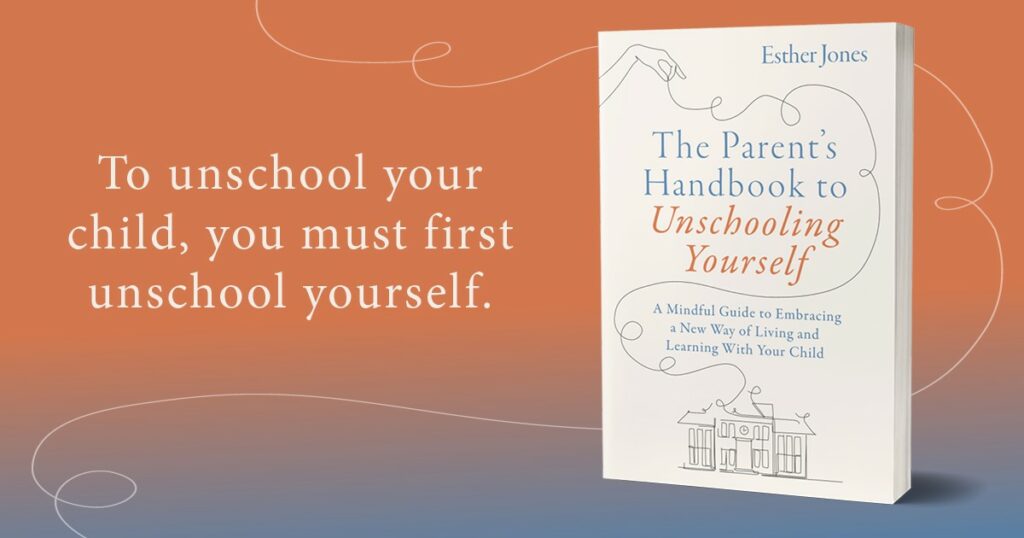
Many parents notice when their child is struggling at school, but the idea of homeschooling can feel overwhelming. Author Esther Jones delves into the scrutiny that often happens when you step away from the mainstream and how to be confident in taking a different path. The Parent’s Handbook to Unschooling Yourself is available now.
Among all the things that need to be navigated when you take your child out of mainstream education, dealing with what other people think of your choice can feel particularly complicated. When you are still finding your feet with it all, and probably feeling a little wobbly, the real or imagined scrutiny of others can be excruciatingly uncomfortable. As a fairly conflict-avoidant person myself, choosing a path that seemed to invite raised eyebrows and endless questions was far from easy. I remember in the early days bracing myself before heading out and about with my children during school hours, aware of the inquisitive looks and questions that might come my way, and not being quite sure how to respond.
Feeling affected by how others see us is entirely normal. Physician and author Gabor Maté talks about how essential it is for human beings to feel like they belong, and how, from an early age if we have to choose between authenticity and belonging, we will most likely choose belonging. It feels safe to be part of something bigger and to be approved of, and it can feel lonely and risky to do something different. And so it takes some courage to choose authenticity over belonging and safety, and to take a path that others may not approve of.
The idea that mainstream school is the only valid path for children is deeply ingrained in our society, so it is inevitable that if you choose to step away from it, some people won’t understand or may even strongly disagree with your choice. It would be a small miracle if they didn’t! You may find yourself drawn into awkward conversations with strangers who ask why your child isn’t at school. Family gatherings might feel tense as you field questions about how your children are learning, what they do all day, or how they will ever get to college. You may find that it becomes a painful point of contention with people you love. Sometimes the scrutiny can be internal and you may catch yourself wondering what others would think of how your day looks, or projecting your fears onto people who haven’t said a word.
So what can you do to make this all a bit easier? How can you navigate the discomfort until it eventually gives way to something more empowered?
Try to accept it
See if you can accept that the painful part is normal and a sign that you have stepped out of your comfort zone. This is a place for incredible growth as you start to understand what it means to show up fully in your life, particularly if you are a reforming people-pleaser. In order to have the capacity to hold your child in a steady space, you will almost certainly find that you need to unravel the belonging vs authenticity piece.
Do the deeper work
Notice what is going on in your body when you feel under scrutiny or disapproved of. What’s the old pattern? What are the thoughts? Cultivating the capacity to observe and to be curious allows us to get out of old reactive patterns and to have a much wider perspective. With practice, those old patterns lose their grip on us.
Recognise this may be more about them than you
Your choice may be triggering discomfort in the other person. Perhaps your sense of freedom feels threatening to them, or that by choosing something different, they feel you are judging their choice. We can never know what someone else is feeling, but it can be helpful to remember that their reaction to you is as much about their life as it is about yours.
Set your boundaries
I found that in the beginning, when strangers asked why my children weren’t at school, I would feel the need to justify what we were doing. Over time, I realised that I didn’t owe anyone an explanation and that I also needed to be okay with people not understanding or approving. This was my place of growth—to learn how to be with the discomfort rather than searching for approval. I was always polite but I stopped offering more information than absolutely necessary unless there was genuine curiosity and connection. You may find it helpful to have a couple of set answers that satisfy both you and them. For example, I didn’t mention unschooling as that would invite an avalanche of questions. I would simply say that my children didn’t go to school. If someone asked if we homeschooled I would say that they learned through their interests.
Focus on the good stuff
When the scrutiny comes from someone you care about and value, it can feel more complex. There are many things to talk about that are not school and learning, so see if you can focus on the common ground instead. Don’t feel like you have to bring them round to your point of view, unless they are open to learning more about home education and unschooling. The one thing that will eventually bring them round is you and your children thriving, so keep your attention there. If the topic does keep coming up and it feels contentious and difficult, it may be necessary for you to set a boundary around that, and explain that you prefer not to have those conversations.
If they are open to knowing more
If a loved one would like to understand more, then try sharing a podcast, book or other resource that you think might help. Remember that the system is deeply ingrained and seeing things from another perspective can be a long journey, so let them take the time they need.
Show them what your child does
If the person is a family member who genuinely loves and is concerned about your child, tell them the things that will help them see that your child is happy and learning. Put your days into words that help them understand the value in things that may look unusual to them.
Reassure them
Many people simply have no notion of how life can look without school and how children can fare in later life. If they are open to it, share other families’ stories with them. There are lots of people out there whose children have taken alternative routes through life and thrived.
Make sure you have what you need
Feeling scrutinised or judged can be depleting and isolating. As parents, we often feel like our needs are the last priority. But in fact, there is nothing more important in all of this than how you are. It’s essential that you find the people and practices that support you and give you confidence. If you don’t have anyone locally, you can find lots of online groups where you can share with other parents who are on the same path.
Over time you will gain so much confidence in yourself, your children and the life you’re creating together that the outside noise will quieten and you won’t give a second thought to what anyone else thinks. Until then, be very kind to yourself and appreciate the work you’re doing.
The Parent’s Handbook to Unschooling Yourself by Esther Jones is available now.