Writing With an Open Heart: Lessons From the Process
By Daniel O’Shaughnessy. Find his book, Letting Go of Perfect: A Gay Man’s Guide to Healing from Body Dysmorphia here.
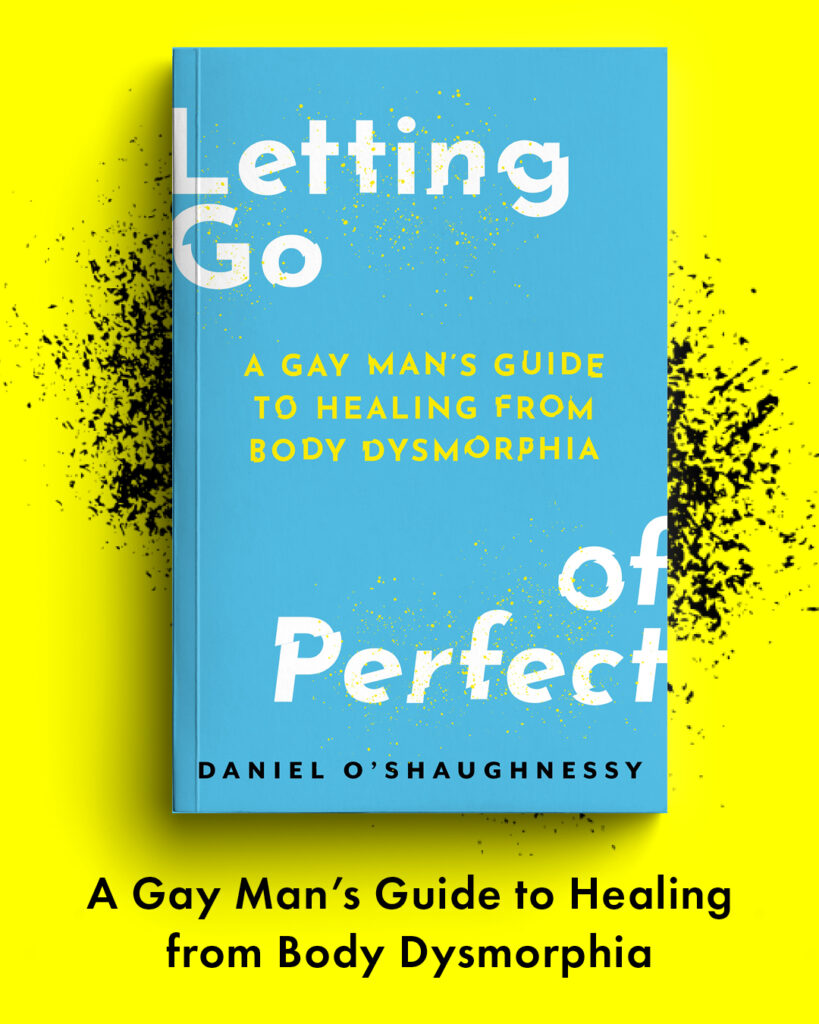
When I first started writing Letting Go of Perfect: A Gay Man’s Guide to Healing from Body Dysmorphia, I underestimated just how much of myself I would have to put on the page. Writing about body image, shame, and healing meant bearing my heart and soul in a way that was both liberating and confronting. You think you’re just writing a book, but you quickly realise you’re processing your own story.
The experience taught me that writing is rarely straightforward. It’s not just putting words on a page; it’s about finding ways to show up for your creativity, manage self-doubt, and trust the process. If you’re working on a big project, whether it’s a book, a blog, or something personal, here are some lessons I learnt along the way that might help.
Give Creativity Room to Breathe
One thing I learnt early on is that creativity doesn’t always show up on demand. There were days when I sat staring at the screen, frustrated that the words wouldn’t come, and other days when I surprised myself by writing thousands of words without noticing the time. I used to think the hard days meant I wasn’t good enough or that the project was going nowhere, but I’ve realised those moments were part of the process. Sometimes, the best thing you can do is step away.
Taking breaks felt counterintuitive at first, but I noticed my best ideas often arrived when I wasn’t trying to write at all: on a walk, making coffee, at a yoga class, or sitting in silence. Creating space for your mind to reset can help you come back with more clarity. If you’re stuck, step back. Trust that the ideas will come when you’re ready to receive them.
Approach Editing with Curiosity
The writing itself was challenging, but editing came with its own lessons. There were times when I felt a twinge of resistance, moments where my ego wanted to hold on to a sentence or section that, deep down, I knew wasn’t working. It’s uncomfortable to admit that something you wrote isn’t quite right, especially if it felt personal or hard-won.
What helped was noticing that resistance rather than burying it. Instead of defending every line, I started asking myself why I wanted to hold on. More often than not, the changes made the work stronger.
If you’re writing, try to approach editing with curiosity rather than fear. Your first draft isn’t supposed to be perfect. Trust that refining your work doesn’t erase your voice; it sharpens it.
Protect Your Creative Headspace
One thing I learnt while writing the book is that the environment you work in shapes the quality of your ideas. When I was distracted by emails, scrolling, or trying to multitask, I rarely produced anything worthwhile.
I started creating dedicated writing blocks where I’d put my phone away, close unnecessary tabs, and focus fully on the work. It wasn’t about sitting for hours; even short, uninterrupted stretches made a tremendous difference.
I also leaned on a few small habits to support focus. As a nutritionist, I know how much brain health affects creativity, and I found that taking a lion’s mane supplement helped me stay more present and clear-headed during longer writing sessions, while also being mindful not to go overboard with coffee, which can easily tip from helpful to counterproductive when it comes to focus.
If you’re working on something creative, protecting your headspace matters. Give yourself pockets of focus without constant input or distraction. Small boundaries and supportive habits can make it much easier to get into that flow state where your best ideas happen.
Use Tools That Keep You Organised
On a practical level, one thing that helped me manage the book was using Scrivener. Breaking the project into smaller sections made it less overwhelming and allowed me to focus on one piece at a time.
If you’re working on a big project, finding tools or systems that suit your style can make a significant difference. Using tools like a writing app, sticky notes on the wall, or simple lists provides structure that fosters greater creativity.
Be Honest and Vulnerable
The moments that connected most deeply with my readers came from honesty. Sharing the parts of myself I once wanted to hide felt uncomfortable at first, but I’ve learnt that vulnerability builds trust.
When you allow yourself to be real, your writing resonates in a way that polished, guarded words never can. You don’t have to share everything, but showing pieces of your truth can make the work far more powerful.
Trust the Process
One of the hardest stages of writing wasn’t finishing the manuscript but sharing it. After working on it for so long, it’s natural to feel protective of certain sections or sentences. Handing it over to the editing team felt exposing, but I realised the goal wasn’t to change my voice; it was to strengthen the work.
Good editors help you see the things you can’t spot yourself. They bring a fresh perspective when you’re too close to the material. If you’re working on your project, try to stay open to feedback. It can feel uncomfortable at first, but trusting the process and the people supporting it can take your work further than you could manage alone.
Daniel O’Shaughnessy is a nutritionist, mindset coach, and author of Letting Go of Perfect: A Gay Man’s Guide to Healing from Body Dysmorphia (out October 2025). www.danieloshaughnessy.com