The Baptismal Basis of Inclusive Theology: Trans Affirming Churches
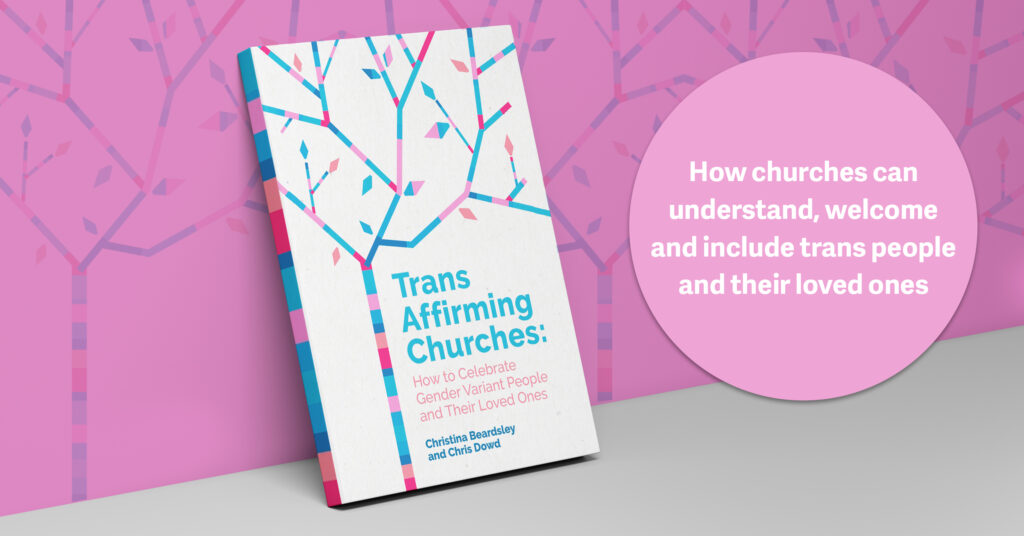
This is an extract from Chapter 3 titled ‘The Culture Wars and the Christian Community’ of Trans Affirming Churches by Christina Beardsley and Chris Dowd.
‘Fancy a swim?’ The Baptismal Basis of Inclusive Theology
The night that I (Tina) appeared on the local television news item about trans women and the women-only pool, an email dropped into my inbox with the subject ‘Fancy a swim?’ The sender, a woman who had swum in the women-only pool for several years, invited me to join her ‘not as a protest or demonstration, but so that you can come and enjoy the water.’ I was very touched by this and met the sender for coffee (rather than a swim!). The woman did not have a religious faith. Her motivation for writing was that she objected strongly to the notion that one group of people claimed ownership of the pool. She had witnessed another woman in the pool telling a trans woman ‘you shouldn’t be here’ and challenged her behaviour. Hence, she reached out with an invitation during the latest row. This episode reminded me of a women-only event in January 2012, organised by the Cutting Edge Consortium, a network of faith and belief (non-religious) groups opposed to homophobia and transphobia. Shocked to discover that trans women were being excluded from women-only events, the organisers invited me to be on the panel and the publicity emphasised that this event was for ‘everyone who identifies as a woman’.
In fact, I was reluctant to take up the invitation to go for swim, even though the policy stated that I could, and my new friend would be beside me. By promoting fear, the exclusivist position, although mistaken and harmful, is often successful and many trans people are reluctant to enter our churches for this reason. No one wants to be rejected, especially if it has happened before, so some trans people may need a great deal of coaxing before they can even begin to try church again.
‘Fancy a swim?’ The invitation evokes the water of the pool or pond – its depth and refreshment – companionship, and theologically, the sacrament of baptism. In churches where the baptism of children is the norm, one can easily overlook the important role of sponsors for adult candidates, and of the catechetical journey, in which someone more experienced in the Faith nurtures the candidate, leads them to the baptismal waters, and continues to support them on the other side of the font.
A trans inclusive theology needs to find embodiment in guardians of the openness of sacred space, who are unafraid to challenge those who impose false limits; people with an inviting manner, ready to accompany the trans person, whether baptised or unbaptised, as they splash in the shallow end of their new community.
A Taizé icon of the Baptism of Christ (which is behind my (Tina’s) desk as I write) depicts the Spirit descending as a dove – a reminder of the gift of the Holy Spirit in baptism – and below the figure of Christ, Adam and Eve swim among the fishes in the River Jordan! Their primordial freedom, once so tragically lost, seems restored at last, along with the divine image, as Christ is proclaimed, ‘Beloved Son’.
All human beings need to love and to be loved, and sin is mostly the failure to love. Baptism is the sign that we are, to use the King James translation, ‘accepted in the Beloved’ (Ephesians 1.6). Baptism is also the basis of the Church’s life and ministry. It was by paying close attention to the theological and ecclesiological implications of the baptismal covenant, that the Episcopal Church in the United States made such huge strides with the inclusion, first of women in the Church’s life and ministry, and latterly lesbian, gay, bisexual and trans people.
Inclusion in the Church for one group of people means inclusion for everyone, not simply on the rational, secular ethical principle of equality, but because of what it means to be a full member of the Church through baptism.
Steve describes the baptismal formula Galatians 3.27–28 as ‘the classic verse’ and ‘helpful’:
For as many of you as were baptised into Christ have put on Christ. There is neither Jew nor Greek, there is neither slave nor free, there is neither male nor female; for you are all one in Christ Jesus.
A biblical passage with huge meaning and relevance to the struggle for the full inclusion of women in ordained ministry (see Schüssler Fiorenza1994, first published 1983), it is also loved by and significant for trans (and also intersex) Christians as a theological foundation for their affirmation within the Body of Christ.
Schüssler Fiorenza’s (1994, first published 1983, p.218) feminist reading of this verse is that early Christianity had an egalitarian self-understanding of ‘the oneness of the body of Christ, the church, where 88 Trans Affirming Churches all social, cultural, religious, national and biological gender divisions and differences are overcome and all structures of domination are rejected’. Yet it appears to have been quickly modified by the idea that a women’s gender is erased by her baptism, her union with Christ, and her participation in his body, the Church.
The notion that baptismal identity in Christ erases one’s gender identity often arises in Church discussions about rites for trans people. It can be a way of dismissing trans people’s experience by implying that their gender identity has been erased by their baptism. Aspects of our identities that keep us in bondage, such as racism or sexism, are broken by our baptism into Christ, but the effect is to enhance who we are, rather than to belittle, or render someone invisible.
Liturgies co-created by trans people and their clergy often include the renewal of baptismal vows, thereby linking the trans person’s unique journey with their pledge to follow Christ. Trans people who were baptised as children may wish to renew their baptismal vows, and to receive a certificate in their current name, which reflects their gender identity. In very conservative churches even this can be problematic, as George explains:
These are things of great importance… I have tried to find someone to help me through the official routes… I can’t find anyone and if supposedly there is such a person they will never get OK from the bishop, the archbishop, whatever.
It would be simply ‘out of the question’, despite emphasising the continuity of the person’s Christian identity.
Not all rites co-created by clergy and trans people include the renewal of baptismal vows. Some focus on a name change, or the celebration of a gender identity, previously hidden but now being claimed. When Church governing bodies discuss liturgical provision for trans people, they tend to focus on their Christian identity and renewal of their baptismal faith. The sacrament of Christian equality, baptism neither precludes, nor erases, particular identities or specific needs within the Body of Christ.
Christina Beardsley is a trans woman and priest in the Church of England. She is a member of the Sibyls: Christian Spirituality for Trans People and the author of several books and articles on faith and gender variance.
Chris Dowd is a United Reformed Church minister who has done doctoral research on the spirituality of trans people and has many years’ experience of supporting trans people.