Your Silence Won’t Protect Them: Why Parents Need to Talk About Porn
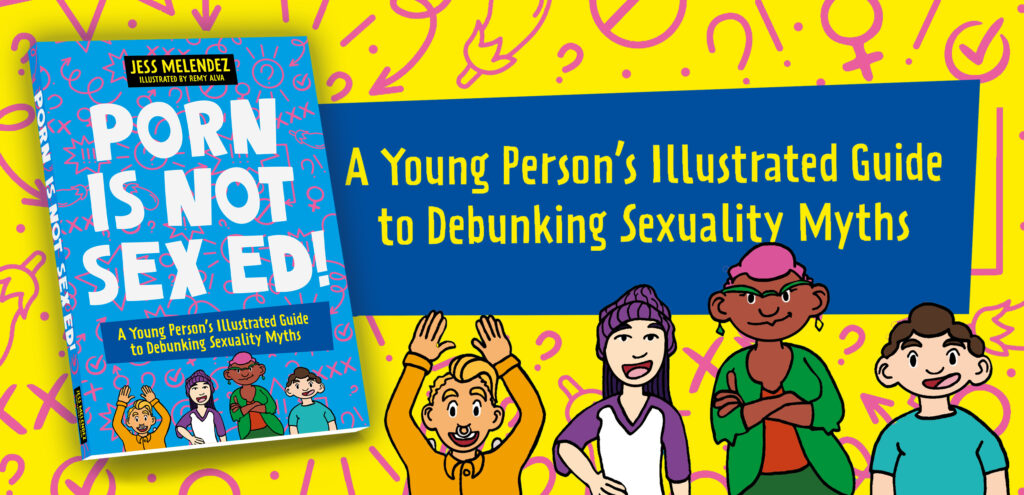
By Jess Melendez. Find her book, Porn Is Not Sex Ed! here.
Talking about porn with your kids can feel…uncomfortable. I get it. Even saying the word porn out loud can make some parents cringe. But here’s the truth: your silence doesn’t protect your kids. It leaves them to figure it out alone – usually through TikTok, Google, or whatever the algorithm decides to bless them with next. And we all know, the internet isn’t exactly a reliable sex educator.
That’s exactly why I wrote Porn Is Not Sex Ed. After more than a decade teaching young people about sex, media, and relationships, I kept hearing the same question from parents: “I don’t even know where to start.”
This book, and honestly my whole career, exists to make that conversation possible. It helps young people understand the difference between fantasy and reality, and it gives parents and caregivers the language, confidence, and calm to approach these topics without shame or panic. Because if your kid’s learning about sex from Pornhub, you’re not too late..but you’ve got some catching up to do.
What Parents Often Get Wrong About Sex Education
Let’s start with a big one. Some parents still confuse sex education with sexual instruction. They imagine teachers handing out how-to guides or rolling in a projector for a “special demonstration.” Spoiler alert: that’s not how any of this works.
Comprehensive sex education covers puberty, anatomy, consent, communication, relationships, digital safety, and yes, porn literacy. It’s about giving young people accurate, age-appropriate information so they can make healthy choices and think critically about what they see online. When parents avoid these conversations, kids find answers elsewhere. And “elsewhere” is often a chaotic blend of misinformation and unrealistic depictions of sex and relationships.
One of my favorite things to do when working with schools is hosting parent nights before lessons begin. Parents usually walk in nervous, expecting explicit material. Once parents see the actual curriculum, their fear often turns into relief. They realize it’s not about corrupting young people. It’s about communication, consent, and safety. These sessions give parents the space to unpack their own values, confront a few myths, and feel more equipped to guide their kids through the digital world.
Looking back, I wish I had that kind of support growing up. I didn’t have a safe adult to talk to about sex or sexuality. I was accidentally exposed to online porn in third grade (yes, third grade), and by middle school, dial-up internet became full of pop-ups and confusing messaging about bodies and relationships. I had to figure it out alone, and it wasn’t always right. That’s part of why I do this work. Kids shouldn’t have to navigate something so complex without an adult they can trust.
What Teens Already Know and (That Might Shock You)
Parents are often surprised by how much their teens already know about porn. Research shows the average age of first exposure to online porn in the U.S. is twelve (1 – see source below), and plenty of kids see it much younger. Today, porn shows up on Instagram, TikTok, and even YouTube. It is embedded in social media platforms, where teens see it in ways adults might not even recognize.
Teens know what OnlyFans is. They see how influencers blur the line between regular content and adult material. Some even recognize how popular TikTok creators guide viewers toward subscription-based adult pages—what some people call the “TikTok to Porn Pipeline.” This kind of exposure is constant, unfiltered, and often invisible to parents.
What may surprise most parents the most is how observant young people can be. Many already know porn isn’t real. They recognize exaggerated bodies, over-the-top performances, and unrealistic scenarios (like the pizza delivery doesn’t come with sex). What they need is validation – someone to say out loud, “You’re right, that’s not real sex.” That confirmation helps them trust their instincts, question what they see, and develop a healthier understanding of relationships and intimacy.
What Teens Aren’t Learning and Why It Matters
Even though teens are surrounded by sexualized media, most aren’t learning how to think critically about it. One of the biggest myths they internalize is that porn reflects real life sex and relationships. It doesn’t. Porn is performance. It’s scripted, edited, and produced for entertainment, not education.
That’s why porn literacy matters. It’s not about shaming curiosity or banning content. It’s about giving context. It teaches young people to identify what’s missing: consent, mutual pleasure, and realistic bodies. It helps them talk about power dynamics, body image, and mutual respect. It also gives parents a way to discuss emerging digital issues like deepfakes and explicit video games.
Nearly 98% of AI-generated deepfakes online are pornographic, often using real people’s faces without their consent… including minors (2 – see source below). Some online video games have featured sexual violence before being pulled from websites. These topics aren’t easy to talk about, but they’re part of the online world our kids live in. When parents avoid them, they leave their children without the tools to protect themselves.
These conversations are about honesty, not fear. When you approach these topics with openness, you’re not scaring your teen, you’re giving them truth, clarity, and confidence. Because if you don’t talk about it, the internet absolutely will.
Where Parents Can Begin
Here’s the good news: you don’t have to be a sex ed expert to start this conversation. You just have to start.
Ask yourself: What are my values? What do I want my child to understand about sex, respect, and relationships? Then bring that clarity into your approach.
Being an “askable parent” means creating a space where your kid knows they can come to you when something confuses or upsets them. Start with curiosity, not panic. Ask questions like:
- “What have you seen online?”
- “What do your friends say about this stuff?”
Then listen. Really listen. No lectures. Just curiosity and connection. You might be surprised how much your teen already knows, and how much they genuinely want your perspective once they know it’s safe to ask.
Yes, some of it might feel awkward. You might sit there wondering, “How did we go from algebra homework to OnlyFans?” But your discomfort is a small price to pay for raising a kid who feels informed, confident, and safe talking to you about hard things.
The Bigger Picture
I understand this isn’t easy. We’re the first generation of parents navigating this mess! But pretending porn doesn’t exist won’t make it go away. Silence doesn’t protect your child. It leaves them wide open to misinformation, shame, and expectations no one can live up to.
Talking about porn does not corrupt kids. It equips them with language, boundaries, and a way to think critically about the world around them. It strengthens trust between parents and kids and helps young people grow into adults that understand communication, consent, and respect.
When I think back to my younger self, I wish I’d had someone who could’ve said, “You’re going to see things online that aren’t real, but you can always talk to me about them.” That one sentence could have changed everything. Your silence won’t protect them, but your honesty just might.
1 https://www.commonsensemedia.org/sites/default/files/research/report/2022-teens-and-pornography-finalweb.pdf
2 https://www.securityhero.io/state-of-deepfakes/#advancements-in-deepfake-techonology
Jess Melendez is a sex educator who has worked with youth non-profits, and with the California school system to create a comprehensive sex-positive sex-ed curriculum, and is a regular conference presenter who has keynoted the National Sex Ed Conference. Jess has written Porn Is Not Sex Ed!