AuDHD – A Life of Inconsistency
By Sarah Hendrickx, an autism diagnostician with 15 years experience assessing more than 1000+ children. Sarah has developed and delivered training for diagnosticians working for the NHS and privately as well as coaching individuals pre- and post-diagnosis.
“A juxtaposed tug of war of needs between order/sameness and a drive for novelty and randomness.”
Participant – The Complete Guide to AuDHD)
The dual diagnosis of autism + ADHD – commonly referred to as AuDHD is a fairly new occurrence, and for good reason. Up until 2013 when the latest version of the diagnostic manual DSM-V was published, autism and ADHD were considered to be mutually exclusive, i.e, if a person was diagnosed with one condition, they could not be diagnosed with the second. This was removed in the latest DSM and so now, both can be diagnosed together.
What this has meant is a huge increase in people receiving either a second diagnosis of either autism or ADHD to add to their primary diagnosis or being diagnosed with both autism and ADHD at the same time.
What this also means is that there are very few resources and research which accurately describes this dual experience, which is why I wrote this book.
As a late diagnosed autistic and even later diagnosed ADHDer, I had long known that my profile was atypical for both autism and ADHD but didn’t have any clear explanation for that. The unique and sometimes complicated overlapping AuDHD profile has answered a lot of questions for me, and – as I have learned in my work and research – for other AuDHDers as well and I wanted to share that with others who may have felt as lost as I did.
On the face of it, you can perhaps see why autism and ADHD were considered mutually exclusive for so long, as they appear opposite and contradictory to each other, and in many cases, they are, which makes life as an AuDHDer so interesting/frustrating. Whilst the autism diagnostic criteria present a precise, routine-driven and focused person, ADHD requires impatience, impulsivity and distraction in both attention and activities. What does this combination look like when existing all within the same person? The answer is the focus of the book.
I was lucky enough to find 69 AuDHD people willing to answer my seemingly endless stream of questions about every aspect of their lives, or their children’s lives. I asked them about their childhood, education, relationships, working life, health and sensory experiences and was delighted and fascinated to learn how being AuDHD had shaped them.
Some reported patterns of behaviour that were clearly in line with what might be expected from an autistic person, and then that same person would reveal a flash of a character trait that only an ADHD person could conjure up. For example, within the realm of decision-making, both diagnoses could be seen to be often battling each other for dominance. Some people reported a deep need for structure and predictability, but at the same time felt a rebellion against the very same, which led them to seek novelty and variety and make big and impulsive decisions on the spot that they sometime – but not always – later regretted.
The contradictions between ADHD and autism can sometimes be helpful, especially at times where you need to take a risk and your cautious autism brain says no and wants to risk assess everything, but your ADHD brain just propels you and everything turns out OK.
This internal – and sometimes external – inconsistency and conflict were at the core of the experience of living as an AuDHDer and came to the surface again and again in the responses of the participants in all aspects of their lives. It was this element of the AuDHD experience that brought the most joy and also the most challenges. The relatively small amount of research into this co-morbid profile suggests that social, mental health and general functioning are all negatively impacted by the combination of the two conditions when compared to those (usually children in the research) with a single diagnosis of either autism or ADHD. One might consider that this conflict may play a part in this, especially for young children who have yet to develop the knowledge and self-awareness to communicate their needs and regulate themselves. What the research fails to focus on or identify are the success stories and positive skills that AuDHDers see and enjoy in their unique profile as outlined by those who contributed to my book when asked what they loved best about being AuDHD.
Creativity and a willingness to give pretty much anything a go (this can be a blessing and a curse).
The blend of intense focus, creativity and deep emotions can make for an incredibly rich and passionate way of experiencing the world.
One of the biggest motivators for me is in trying to present a balanced perspective of life as an AuDHD person – discussing both the pros and the cons, rather than just the cons – to give hope to parents of AuDHD kids. It can be disheartening and distressing to witness your child struggling both at home and in a school system that doesn’t understand or easily accommodate their inconsistent abilities, wondering how they will manage as they grow, and I hope that there is some encouragement in hearing from those who have embraced their duality and created a life that works with, rather than against it. It can be tough to be different, but it can also be a blast.
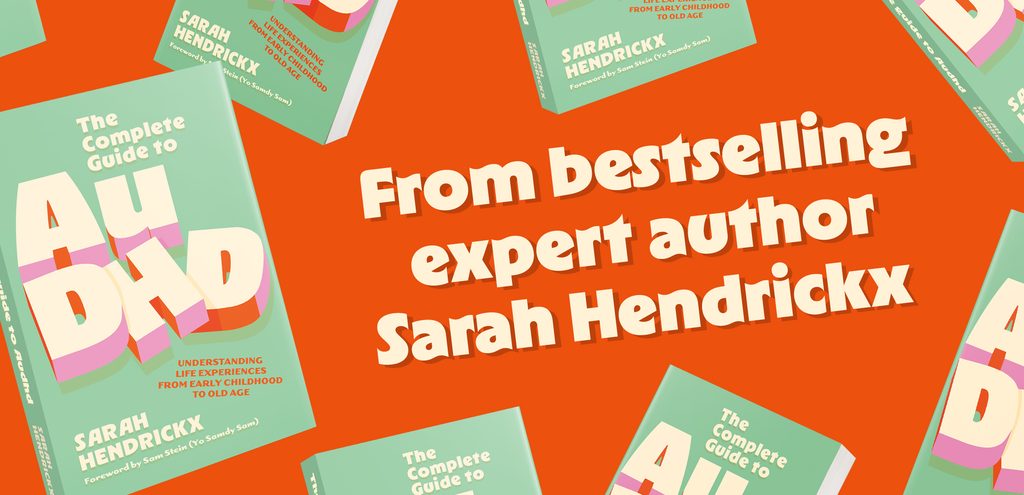
You can buy Sarah Hendrickx’s book The Complete Guide to AuDHD here.