Understanding and Working with Parents of Children in Long-Term Foster Care – An Interview with Gillian Schofield and Emma Ward

“Parents felt that, with a few exceptions, social workers did not and could not understand what it was like for them as parents of children growing up in care. There was stigma to bear as well as the emotional loss. In contrast, social workers talked of being aware of the parents’ distress and loss, but often not having the time to see parents, because they were focussing on work with and for the child, or simply not knowing how to help parents.”
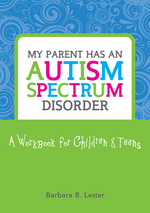

My Parent has an Autism Spectrum Disorder: Barbara Lester talks about her new book for children and teens

“I always knew that my father seemed different from other fathers, but back then I didn’t know there was a name that described this difference or that there might be other people who had similar issues in their families. Once I realized that my father had an ASD, it helped me better understand and get along with him. I have found that over the past ten years there has been an exponential increase in the amount of information available to parents to help them understand their ASD children, but almost no information for children or teens to help them understand their ASD parents. I wrote this book to begin to fill that gap.”

Interview: JKP author Georgina Derbyshire Stands Up for Autism

“Some things that our children say or do can be especially poignant in certain situations and, quite often, they can say things that are so truthful, we just wouldn’t dare say them ourselves! There shouldn’t be anything sad or embarrassing about situations like these. We should see the humour in it and not feel guilty to laugh out loud. I think it is important to embrace moments like these as we have enough of a hard time and laughing can help redress the balance. Laughter is very good for stress too, so there’s no excuse!”

Interest or a Perseveration? When an Autistic Child’s Special Interest Sabotages Community Inclusion

“As a parent, you are the best judge of whether a “passionate interest” is an interest or a perseveration. If it’s an interest, it’s a spring board for community inclusion. If it’s a perseveration, it’s not a springboard at all, but rather an anchor. As with all anchors, it has a useful place – but no boat can move forward with its anchor firmly stuck in the mud.”

Kay and Haitham Al-Ghani on ‘Learning About Friendship’ – Stories to support social skills training for children with ASD in the classroom

“One small boy in my class was having great trouble going on school outings because he would not wear a seat belt. The bus driver came to tell me that he would not be allowed to go on any more trips. I thought this was rather harsh and so the very next day I told my class a story about Tedrick the teddy who would not wear a seat belt…We role-played the parts of the driver, the teachers and the other children on the bus. I emphasised how happy the driver was when all the children wore their seat belts and I asked the boy in question if he would mind taking Tedrick on the next trip. Guess what, that boy was the first one on the bus doing up his own and Tedrick’s seat belt!”