How to Become a Better Manager in Social Work and Social Care
“Like all the managers I know, every day brought challenges for me. I suppose it is one of the reasons we do it, in spite of cursing it sometimes!”
“Like all the managers I know, every day brought challenges for me. I suppose it is one of the reasons we do it, in spite of cursing it sometimes!”
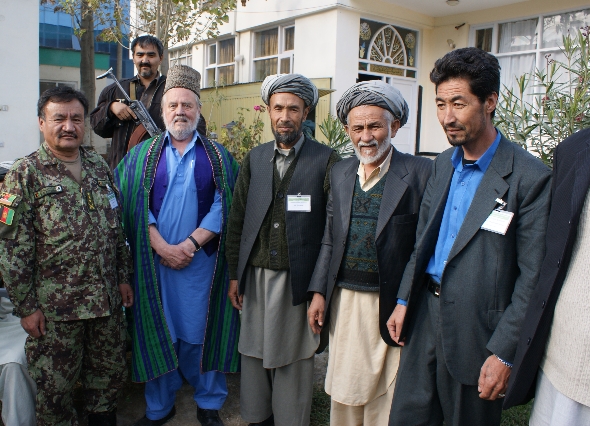
A personal perspective from Tony Whatling, mediation consultant and trainer, and author of Mediation Skills and Strategies: A Practical Guide. Kabul revisited The flight from…
“I think it’s really important to stay in communication with us, as human being to human being – because we are still human beings with a spirit. And it’s spirit to spirit that we can really stay in touch.”
“I think that service users can give a perspective which can be lost without their inclusion. Service users can help to cut through some of the professional ‘jargon’ which excludes people, even other professionals sometimes. Professionals are often under considerable pressures to meet targets or stay within budgets, and even with the best will in the world they can start to lose sight of why they came into the profession in the first place. Service users can help to keep that perspective and keep values sharp.”

“I think the top tip with regard to playfulness is to embrace the playful moment. These are the moments that hold the relationships together, get us through the tough times and stay with us long after the moment has passed.”
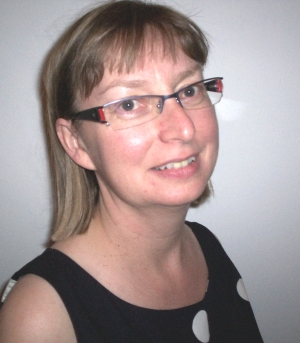
“The news that a parent has a terminal illness generally presents the family with a huge crisis. Everything about family life is catapulted into a maelstrom, routines change and nothing appears to be predictable anymore. If children are not included in conversations about their parent’s illness and possible imminent death they are going to witness all the changes without having any ‘concrete’ knowledge to use as a marker. They will be aware of the changes and know that something is very different but will not be able to form a consistent narrative. As a result they are in danger of piecing together the information they have gleaned and making erroneous conclusions.”
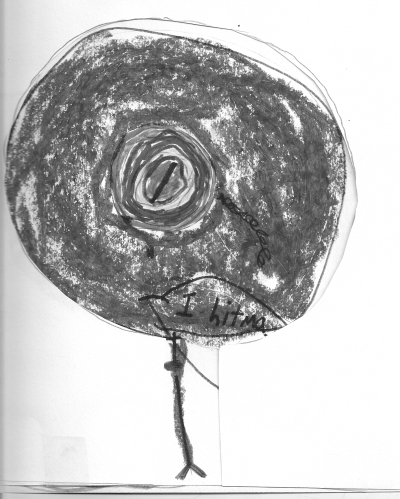
” I hope readers will become less afraid of rocking the boat of authority that urges us to make the child talk in adult terms about what the adult world deems important to them. Rather than having children be obedient patients, I want to encourage us to attempt in our work to foster true self-possession, knowing how very hard it is to achieve. I urge us all to fight the tendency to negate emotion, to negate aggression, to negate anything and everything that pulsates with life and therefore stirs things up.”

“The deeper [sand]box, with its capacity for burying and sinking and erupting, fit the overall view I have developed which I call Dynamic Play Therapy. My approach is interactive and encourages and even provokes what I see as contained wildness in the service of healthy ego development and a natural sense of self-regulation. The work and my thinking about it still continue to evolve. Even as I write these words new ideas are surfacing based on sessions this week with several children. … My interest has been to understand how children experience their lives and best speak about them, knowing that their language is fundamentally different than ours as adults. They speak in images just as we dream in images. So I spend my days offering them materials and a safe space in which to speak thus.”

“In my opinion, social workers, social services and social institutions are characteristics of a civilized society in which human rights, social justice and democracy are conceived of as vital values and standards. Social work contributes to the quality of life of all citizens, social cohesion and solidarity, while on the other hand supporting the established order and relations in society. In academic circles this is sometimes described as the ‘double function’ of social work. This does not have to be a dilemma for social workers, as long as the established order is a democratic one, with freedom of speech and organization, an independent judicial system, separation of political and judicial powers, and respect for human rights.”
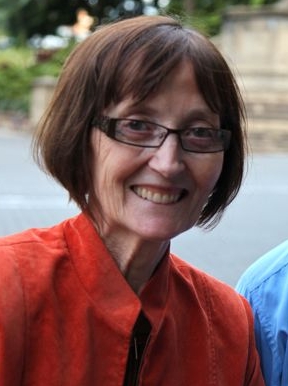
“When I first started, there was no support for people with dementia, as it was assumed we lacked insight. Indeed the words of an Annual Report in 2000 of an Alzheimer’s Association spoke of us as being “mindless empty shells”. At first when I spoke up, people did not believe I had dementia because I could still speak. They said that even if I was showing the early signs, I was not a credible representative of people with dementia because of my level of function. Yet since then I have met so many others who have this diagnosis who are speaking out… We are receiving so much support and encouragement, and we are being listened to and respected. By treating us as experts in what it feels like to have a diagnosis of dementia, services and support are being much improved.”