Josh Muggleton’s Top Tips for Raising Kids with Asperger Syndrome: Tip #2 – Homework
Before Christmas, JKP author Josh Muggleton came to our offices and recorded a series of top tips for parents, professionals and people with Asperger syndrome,…
Before Christmas, JKP author Josh Muggleton came to our offices and recorded a series of top tips for parents, professionals and people with Asperger syndrome,…
“I began writing the book without thinking any of the characters would have autism, but as I was writing, I began to realise that much of Maisie’s personality could be seen as being quite autistic. I was very keen however, that Maisie didn’t become an ‘autistic’ character. I just want her to be Maisie, and explore the world in her own way. The fact she might have autism is just one element of her personality. Perhaps part of me also hopes that we can start to see people for being more than just their autism, we need to be open to all that they are and can be.”
Before Christmas, JKP author Josh Muggleton came to our offices and recorded a series of top tips for parents, professionals and people with Asperger syndrome,…
“The idea was born out of a spirit of collaboration that came up when we noticed that our students were working on similar projects but with an OT or SLP spin. Another way we came together was when the speech team would make quesadillas with the students to work on sequencing, vocabulary and describing goals. And the OT would say, “Can I jump into your activity to practice cutting the quesadilla into triangles with my student?” And so we began to purposely create activities around both OT and SLP goals. We recently found out that the University of California – San Francisco has built therapy rooms for the explicit purpose of the collaboration between therapists. This is a wonderful step towards collaborative therapy.”
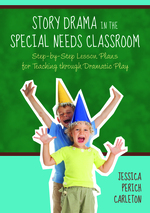
“The formula (called the Dramatic Formula) in the book presents each step with a specific skill that the students need in order to succeed in the drama, while at the same time balancing the level of stimulation for the students so they can focus on each section. Structure and balance of stimulation are the two main factors which give this book success. These two elements allow the students to succeed in a safe and nurturing environment.”

“Professionals need to feel comfortable as facilitators of parents’ learning and engagement with their child at home, rather than seeing themselves as therapist experts who work one-on-one with children. While the latter is sometimes necessary, the former is where we can have the biggest long-term impact on helping parents realise their full potential and assisting them to maximise their daily interactions with their child so that they become more responsive to their child’s needs and communicative attempts. This builds positive parent-child relationships.”

“There is lots of information in the book, and I really hope that people take that on board, but to me, what is more important is that they gain an understanding of, and an insight into life with Asperger Syndrome. If you understand someone with Asperger Syndrome, then knowing that it is named after Hans Asperger is redundant. While that sort of information might be interesting, it is far more useful to know how the person with Asperger Syndrome thinks: what he or she might find hard and why, what things might set them off, and what things will calm them down, what things they will be really good at, and what things they might struggle at.”

“It is important for children to participate in ‘activities of daily living’ which are essential for good health. The more he is involved in the process and has some sense of control, the less he will see it as a chore and the more he will be willing to participate… When approaching these activities, parents need to ask themselves what they are attempting to accomplish. For example, if the goal is for the child to be clean, then does it really matter if bath time is 7PM or 3PM, as long as the time fits with the flow of the family?”

Brian R. King is a Licensed Clinical Social Worker and an international consultant on the Autism Spectrum. He, his wife and their three sons are…

“I never actually drew the pictures to be entertaining! I did the drawings because that’s what I thought when I heard the expression… However I soon realised that people found my drawings amusing because they then realised how little sense the English language makes!”