Josh Muggleton’s Top Tips for people on the Autism Spectrum – Tip #1: Making Friends
In this new series of videos, Josh Muggleton gives his Top Tips on various subjects for people on the Autism Spectrum. This month, he offers…
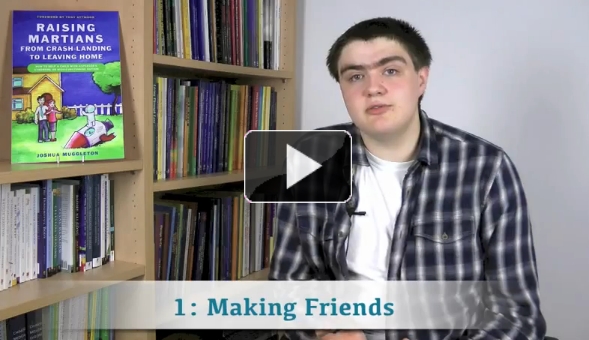
In this new series of videos, Josh Muggleton gives his Top Tips on various subjects for people on the Autism Spectrum. This month, he offers…
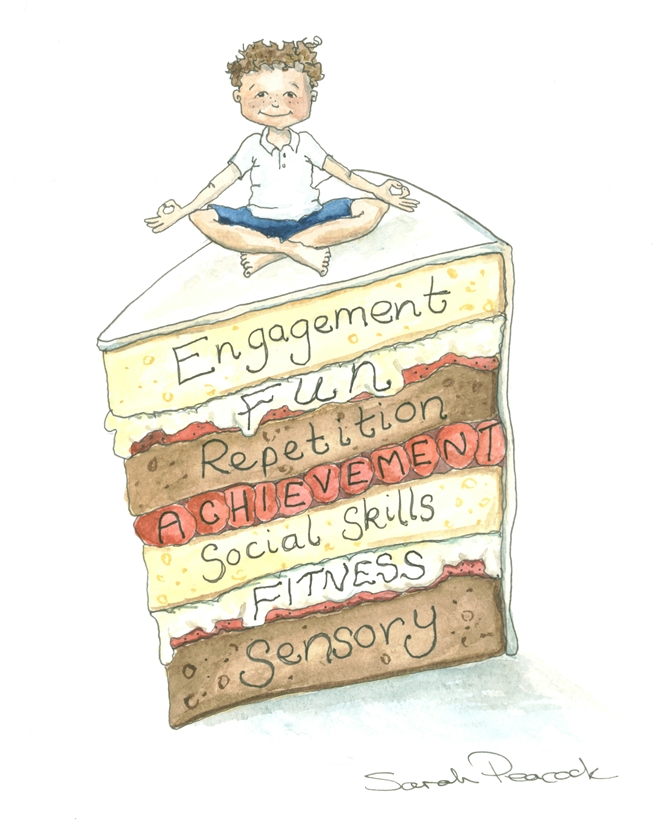
By Michael Chissick, primary school teacher and qualified yoga instructor, and specialist in teaching yoga to children with Autism Spectrum Disorders, and author of Frog’s Breathtaking…

“Kids with High Functioning Autism (HFA) and Aspergers, are very self-aware, and crave social interaction. We work with them to facilitate this, not only to make socialising a rewarding experience but to help them see and remember how it is achieved. It requires constant and persistent reinforcement, but it really pays off. “
“Professionals and parents want the best for children and need to know how to guide them through childhood. Positive Psychology provides the evidence on which to base decisions. For example, we know that optimism is invaluable to mental health because it encourages people to be hopeful and take good care of themselves. It helps people stave off depression by reframing challenging experiences and it increases people’s overall happiness.”

“When I assign this book to parents, they unanimously say: ‘That’s it! That’s my child!’ It is so exhilarating to understand the core issue and apply strategies that work.”
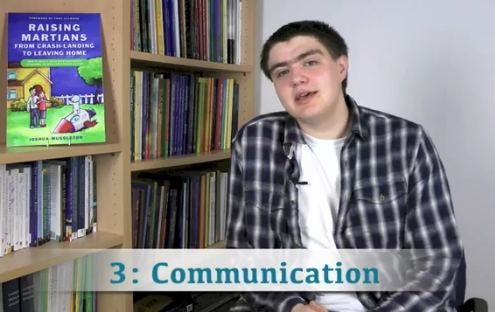
In the third video instalment of Josh Muggleton‘s Top Tips for Parents, Teachers and Professionals, Josh addresses how to improve communication with young people on the…

“One orthopedist operated on a boy without my knowledge on a Friday afternoon. Fortunately, the mother and grandmother knew I had insisted that physical therapy should be started immediately. The child’s school physical therapist was a friend and made house calls over the weekend, so the boy would not stay in bed. He was able walk for several more years because of this. Thus, parents and grandparents must be very aggressive in order to be sure that appropriate orthopedic surgery is being done and physical therapy received, as needed.”
“When we were creating our Reward Plan we decided that it had to be 100% focused on the positive… [W]e were well aware of the negative impact our son’s out-bursts were having on his self-esteem, and we certainly didn’t want to add to that! And so our Reward Plan was born, and I am not exaggerating when I say that it was almost an over-night success.”

“I think the top tip with regard to playfulness is to embrace the playful moment. These are the moments that hold the relationships together, get us through the tough times and stay with us long after the moment has passed.”

“The news that a parent has a terminal illness generally presents the family with a huge crisis. Everything about family life is catapulted into a maelstrom, routines change and nothing appears to be predictable anymore. If children are not included in conversations about their parent’s illness and possible imminent death they are going to witness all the changes without having any ‘concrete’ knowledge to use as a marker. They will be aware of the changes and know that something is very different but will not be able to form a consistent narrative. As a result they are in danger of piecing together the information they have gleaned and making erroneous conclusions.”