Beyond the Buzzword: What Trauma-Informed Practice Really Looks Like
Let’s talk honestly about the phrase trauma-informed.
If you work in education, you’ve probably heard it more times than you can count. It appears in policies, development plans, staff meetings and inspection frameworks. Yet, despite becoming part of everyday educational language, trauma-informed practice is sometimes misunderstood reduced to a checklist, a colourful poster on a staffroom wall, or viewed as a softer alternative to boundaries and expectations.
In reality, trauma-informed practice is none of these things.
At its heart, trauma-informed practice encourages us to look beyond behaviour and consider how a child’s experiences may have shaped the way they experience themselves, other people and the world around them. It recognises that behaviour often represents an adaptation to experience and that relationships have the power to support both healing and learning.
It is increasingly recognised as an essential part of creating learning environments where children feel sufficiently safe to engage, build relationships and participate fully in learning. It is not about lowering expectations or excusing behaviour. It is about understanding how experiences shape development, recognising what behaviour may be communicating, and responding in ways that promote safety, connection and growth.
So how do we move beyond the buzzwords and begin creating genuinely trauma-informed schools?
1. The Quietest Child May Be Communicating the Most
When people think about trauma responses in schools, they often picture the obvious moments: a child shouting, throwing furniture, refusing to enter a classroom or walking out of lessons.
But trauma is not always loud.
Consider Isla, an eight-year-old pupil.
To many adults, Isla appears to be the ideal pupil. She follows instructions, completes every task without complaint, apologises even when she has done nothing wrong and rarely asks for help.
What isn’t immediately visible is the enormous effort it takes for Isla simply to get through the school day.
Because her home life is emotionally unpredictable, she has become highly attuned to changes in adult tone of voice, facial expressions and body language. Long before she enters the classroom each morning, her nervous system is already scanning for signs of danger.
Her compliance is not necessarily a reflection of feeling safe.
It may be a survival strategy.
Rather than drawing attention to herself, Isla has learned that staying quiet, meeting every expectation and becoming almost invisible can feel like the safest way to navigate an uncertain world.
When a child’s threat-detection system remains on high alert, much of their energy is devoted to monitoring safety rather than engaging fully with learning. Outwardly they may appear calm and settled, while internally their nervous system is working incredibly hard simply to stay regulated.
Being trauma-informed means developing the professional curiosity to look beyond behaviour whether that behaviour is loud or quiet. It means gently shifting our thinking from “What’s wrong with this child?” towards “What might this behaviour be communicating?”
2. The Parallel Process: Supporting the Adults Who Support Children
Absorbing the emotional experiences of vulnerable children inevitably has an impact. Over time, repeated exposure to distress can contribute to compassion fatigue, vicarious trauma, moral injury and burnout, particularly when adults feel they must continue giving without opportunities to reflect, recover or reconnect with their own wellbeing.
As Rachel Naomi Remen beautifully put it:
“The expectation that we can be immersed in suffering and loss daily and not be touched by it is as unrealistic as expecting to be able to walk through water without getting wet.”
A truly trauma-informed school recognises that caring for children and caring for staff are not competing priorities they are inseparable. When adults feel psychologically safe, valued and supported, they are better able to offer the calm, consistent relationships that children need.
This means moving staff wellbeing beyond occasional initiatives and embedding it within everyday practice. It means creating cultures where reflective supervision is available, workload is thoughtfully considered, boundaries around communication are respected, and seeking support is viewed as a professional strength rather than a personal weakness.
Trauma-informed schools understand a simple but often overlooked truth: the wellbeing of adults shapes the wellbeing of children.
3. “Doing With,” Not “Doing To”
Trauma-informed practice is sometimes misunderstood as being permissive or lacking boundaries. In reality, children who have experienced adversity often benefit most from environments that are consistent, predictable and emotionally safe.
The difference is not whether boundaries exist, but how they are experienced.
Rather than relying primarily on punitive responses that can reinforce fear, shame or disconnection, trauma-informed practice seeks to understand behaviour within the context of relationships, development and lived experience. Expectations remain high, but they are held with compassion, consistency and curiosity.
Where possible, children are offered opportunities for collaboration and choice. Small decisions where to sit, whether to use a regulation strategy before beginning a task, or how to repair a relationship after a difficult moment can help restore a sense of agency that adversity may have diminished.
The goal is not to remove accountability. It is to support children in developing the emotional safety, regulation and relational trust that make accountability possible.
Trauma-informed practice is not about doing to children.
It is about working with them.
Moving Forward: Tending the Soil
If we want children to flourish, we cannot focus only on the behaviours we see. We must also pay attention to the conditions beneath the surface.
Relationships, safety, belonging and connection create the soil in which learning, confidence and resilience can grow.
We cannot rewrite a child’s past, nor erase the experiences they have carried into our classrooms. But every interaction offers an opportunity to influence their present. Every relationship has the potential to strengthen trust, build safety and create new experiences of being understood.
When schools consistently cultivate environments where children and adults alike feel seen, heard and valued, they do more than respond to trauma.
They become places where healing, learning and hope can grow together.
About the Book
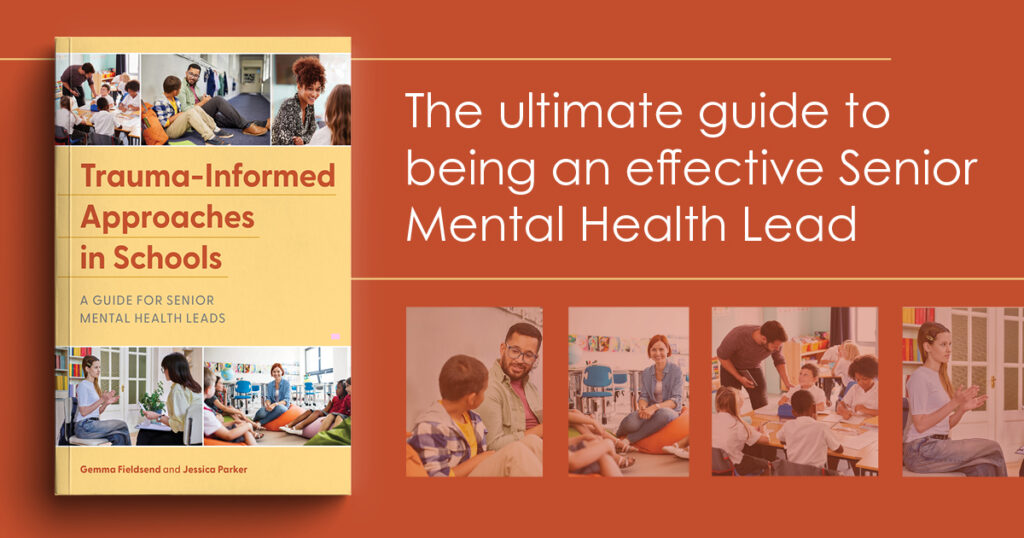
Written with warmth, compassion and a strong evidence-informed foundation, Trauma-Informed Approaches in Schools: A Guide for Senior Mental Health Leads brings together research, reflection and practical strategies to help school leaders move beyond awareness and embed trauma-informed practice throughout school culture.
Drawing on decades of experience across education, healthcare and mental health, Gemma Fieldsend and Jessica Parker explore how schools can create environments where both children and the adults who support them feel safe enough to learn, connect and thrive.
Find out more here.