“What does Lola look like? Representation I am proud of.”
By Cody Daigle-Orians. Their latest book, Love Looks Like Lola, publishes in August 2026 and is available to pre-order here. You can browse their other books at www.JKP.com.
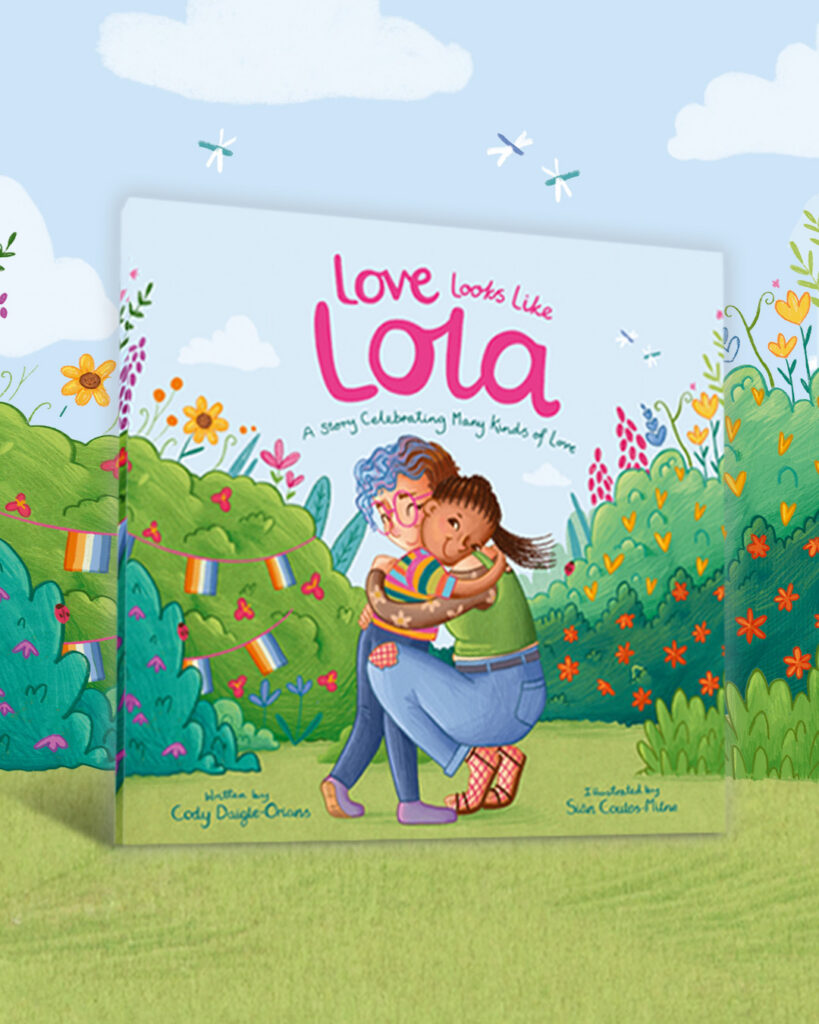
As we get closer to the publication date for Love Looks Like Lola, the more excited I’ve become for the world to meet Claire and Lola. Lola is the first picture book to feature an aroace character, Lola, and it’s the first picture book to introduce young readers to ace and aro identities. That alone is worth celebrating. It’s a thrill to be supported in bringing a first for ace and aro representation into the world.
It’s also a lot of responsibility. “Getting it right” when it comes to aroace experience and identity was a central concern of the writing process. Will young readers “get it?” Will adult ace and aro folks sharing this book see themselves accurately reflected? I wanted Love Looks Like Lola to be an affectionate, honest, and empowering first look into ace and aro lives, one that might help adult ace and aro folks build deeper understanding and connection with the young people in their lives.
But there were other concerns around producing good representation that were on my mind, as well. Does this represent queerness positively? What does this story say about queer people in the world? What does this story say about queerness in relation to young people? I’m very proud of Love Looks Like Lola for what it says specifically about ace and aro lives, but I’m further proud of the book for how it celebrates queerness in the Here and Now.
Lola isn’t just aroace. She’s openly aroace. This is something I’m particularly proud of. Lola’s aroace identity isn’t hinted at or inferred in the book. Lola is openly aroace to both Claire and to the reader. This matters. So often, queerness is asked to speak softly and in code, especially in situations that concern children. Queerness is either “too difficult to understand” or “too dangerous for children to know about.” I wanted to show, through the relationship between Lola and Claire, that queerness can be clear and named without confusing or harming children. It’s just another way for someone to be in the world.
Lola’s queerness doesn’t exist in a vacuum. She’s got community. It’s easy for stories to tokenize their queer characters by isolating them as a little queer island in a world of non-queer folks. In Love Looks Like Lola, I wanted Lola’s queer life to be part of a larger queer fabric in her community. That’s why we see her trans friends, her partner, a gay neighbor, and her fellow ace and aro friends. Lola isn’t a lesson for the straight people around her. She’s got a vibrant queer life that she’s an integral part of. It’s a good reminder that queer people aren’t solely their queer identity and experience. We are full people with full lives beyond what flavor of queer we identify with.
Lola is embraced by the non-queer people around her, too. It was also important to show our central aroace character being embraced by the non-queer people in her life, as well. She’s the go-to for Claire’s parents when they’re out of town. We also see Lola included in the family festivities in the wedding video. Most importantly, we see young Claire warmly embraced and warmly embracing all of the queer connections in Lola’s life. It felt important to represent Lola’s place in the world in this joyful, accepting way as a pushback against the rising waves of transphobia and queerphobia everywhere. Representing a queer person as a valued, accepted, and loved part of a broader world feels necessary in this moment. It’s why the book ends the way it does – a celebration where everyone is welcome and everyone is sharing in the joy.
Love Looks Like Lola is my third book with Jessica Kingsley Publishers, and each has been guided, in some way, by a single question: “What’s the book you needed when you were that age?” For I Am Ace and The Ace And Aro Relationship Guide, it was imagining the book teenage me could have used to better understand myself. For Love Looks Like Lola, it was imagining the kind of world filled with joy and possibility that would serve as a solid foundation for a young me to grow up in.
When Love Looks Like Lola finally finds its way into homes and hands and shared reading time everywhere, I hope two things linger after the final page is read. First, I hope ace and aro lives are a little less mysterious. Second, I hope the joy of being queer is seen and felt.
To me, that would be what love looks like.

Cody Daigle-Orians
Cody Daigle-Orians is an asexual writer, educator and creator of Ace Dad Advice, a social media-based asexuality education project. They are the author of I Am Ace and The Ace and Aro Relationship Guide. Cody lives in Columbus, Ohio.
Love Looks Like Lola publishes on 21st August 2026 and is available to pre-order now.