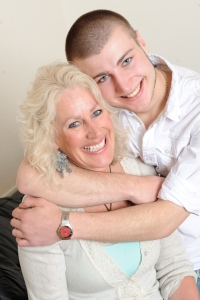
Article by Jan Greenman on life with her son Luke, who has ADHD and Asperger Syndrome
Jan Greenman is the author of Life at the Edge and Beyond: Living with ADHD and Asperger Syndrome – a searingly honest account of bringing up…
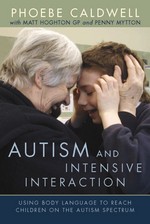
We’re very pleased to bring you these clips from Phoebe Caldwell’s latest JKP title! Autism and Intensive Interaction is a three part film following Phoebe…
Today the Telegraph has published an article called ‘Help at last for the Aspergirls’ that features comments from JKP author Rudy Simone about her new…
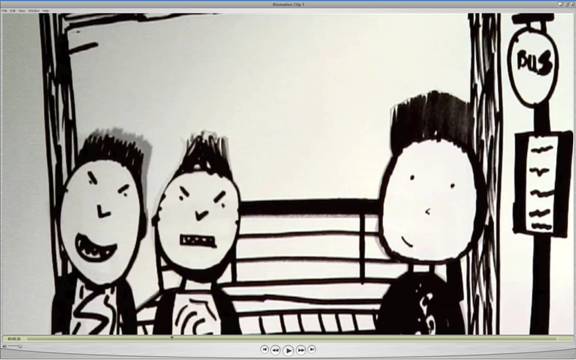
**Winner – International Animation Award, Edinburgh Mental Health & Arts Festival 2008** Created by pioneering science and youth arts project Biomation, An Animated Introduction to…
“…it’s challenging for students with ASD to participate in “non-preferred” tasks. As such, parents of students who go away for college worry that their student will spend most of his time playing video games, rather than focusing on college studies. Sadly, the risk of this happening is quite high. However, students can learn strategies to manage and balance their time, provided the student receives adequate programming throughout his life.”
“…autism helps us appreciate diversity of looking at and interpreting the world. There is no ‘correct’ way to perceive our environment. The exploration of the ways in which autistic individuals think and perceive the world assists us in understanding the diversity of our own nature and our own experiences. Autism shifts the focus of our exploration from the practical everyday activities of life to understanding what it means to be human, and the necessity of recognising the rich diversity of life. Many of us still do not trust anything that is different from ‘normality’. However, there are many different ways to see the same thing, and each of them may be correct if seen from the right perspective.”
“…an Aspergirl’s most prized possession is her unique intelligence and she wants to be appreciated for that more than anything. Her education and utilisation of her unique skills is the key to a satisfying, fulfilled life. Some will want socialising, some won’t, but it is important that she learns to value others, so that she does not end up isolated, and so she can share those gifts with the world.”
“I never assume that I know exactly how individuals with autism think, feel, sense, or experience the world. My main goal when using role play with parents, para-professionals, and teachers is to get people thinking about things from a different angle and to encourage them to walk in the shoes of the people they support.”
“Autism can be an incredibly isolating disorder. Not only do parents wind up spending a huge amount of their time, energy, money and love on therapies and care – they also feel like outsiders in their own communities and families. It can be even worse for siblings who, through no fault of their own, are often excluded from ordinary activities. By getting out and getting involved in the community as it’s possible, families are able to reconnect with clubs, churches and synagogues, sports leagues… and often with their own families. Another huge plus for getting out into the world with a child on the autism spectrum is that families discover their child’s real strengths and abilities in ways that would never be possible in the school or therapeutic settings.”
“When I was young, I had no self-esteem and figured the difficulties my Asperger’s caused made it impossible for me to achieve anything. I gave up on myself and the world. Now that I am older, I realise that Asperger’s is probably the main reason that I have been able to achieve so much…”