Four good reasons for using play during therapy with children and adolescents
By Colby Pearce, author of A Short Introduction to Promoting Resilience in Children. Many children and adolescents are reluctant, at-least initially, to attend and be…

By Colby Pearce, author of A Short Introduction to Promoting Resilience in Children. Many children and adolescents are reluctant, at-least initially, to attend and be…
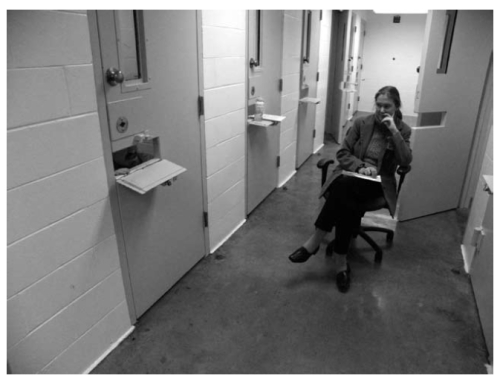
“When I was invited to contribute a chapter to this important anthology, I knew that I wanted to focus on one prisoner [Larry]…[T]he second half of the chapter…relates his transformational journey through the works of Shakespeare, using his analysis of the characters to provide a self-analysis that was truly life-altering. As one example, we focus on the character of Macbeth, examining some parallels between that character and Larry’s early criminal experiences. While some of those parallels are disturbing, the chapter concludes with the celebration of Larry’s ‘salvation through Shakespeare.'”

” I find that older people are often patronised, and their ability to recover and make changes in their lives is often not acknowledged. Dr Martin Blanchard speaks in the Foreword of a ‘therapeutic nihilism’ that exists in attitudes towards the client group described in the book. One effect of this is that older people are often expected to fit into generic treatment systems, when they clearly have needs that will not be met by those systems. Thus the need for a specialist approach such as the book describes.”
“My goal in counselling young people around issues of ordinariness, I suppose, is to help them begin to feel that the way they are is fine. They’re not going to be as good as they always longed to be, but nor are they going to be as dreadful as they always feared they might be… That’s not to say that they won’t achieve massively, but that they don’t have to be striving for it to such an extent that they then start behaving strangely or self-destructively or being destructive at other people’s expense in order to get recognised, and in order to be different.”

In this video, JKP author and psychologist Tony White talks about some key features of his new book, Working with Suicidal Individuals, including subjects rarely covered…
“There is a group of people who have made what is known as the suicide decision in childhood. From a psychological point of view this person could be considered the ‘truly’ suicidal person. Their psychological make up is structured such that suicide is a viable option for them to solve difficult problems at some point in their life. These people can be treated such that they can make a change to that early suicide decision and thus the likelihood of suicide being used as a problem solving technique in the future is greatly reduced.”

The 2010 American Music Therapy Association (AMTA) Conference took place at the Cleveland Renaissance Hotel in Cleveland, Ohio, USA, this year and JKP was, once…

This moving video about the new JKP book, Performing New Lives: Prison Theatre, was made by author Jonathan Shailor, and chronicles the uplifting and profound…
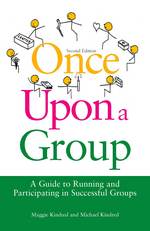
“We are in groups throughout life. Many different kinds of groups occur in social clubs, health and social care, industry, commerce, education, politics, churches, and voluntary organizations. People of all ages are involved, including small children. Most of them have no idea they are involved in ‘group processes’! Groups are natural, and usually get by without analyzing themselves. So why bother to spend time in training? … We have written this book because we believe that using a group isn’t mystical, but can be considerably more enjoyable and effective if members know a little about how groups function.”

“Although I have made a good recovery from CFS/ME and currently have few symptoms, I have to live a much reduced lifestyle to stay well – good sleep routines, minimizing stress, not saying yes to every request and seeking a lot more support than I used to, especially when I get over-tired…The danger for people whose CFS/ME symptoms have improved is that others see them looking well and doing things again (and writing books!) and think this means they are fine, when the reality is far more complicated!”