Event: An Evening with Master Zhongxian Wu
Here’s an event you might be interested in by one of our most respected authors who is visiting the UK in February for a series…
“The activities in the book capitalize on AD/HD traits because I use the traits as the vehicles to complete the task. AD/HD students like to move, so activities include jumping answers, and singing facts, and activities that are interesting enough to promote focus. The child is empowered to make tents, read on the floor, discuss emotions, and pop bubble paper.”
“Looking back I think that one of the main factors that inspired me to turn the yoga play into a book was the feedback from the children. I have lost count of the amount of times that children would tell me how they had used the techniques to deal with incidents in their lives. Problems ranging from being angry at siblings who stole their sweets or broke their toys, to being the calming influence in big family arguments. My two favourites will always be: the nine-year old boy who was terrified of the dentist and who quietly sat in the waiting room, and ultimately the dentist’s chair, practising his Crocodile Breath to calm himself; and the ten year old girl, who was angry with her parents, who would go to her room and practice Woodchopper Breath every day for three weeks, who eventually came and told the class teacher and me that that she had Haaaa’d out her anger.”
“One of the reasons that I am so convinced about the importance of supervision is the experience I had as a trainee social worker over thirty years ago. My supervisor was absolutely committed to social work, genuinely interested in me and how I was developing, challenged me when needed and encouraged me to try out new ways of working. At times I might have taken a few (manageable) risks, but it was a from a safe secure base. I think it was the combination of a supervisor who was motivated herself and able to motivate and encourage others that made the diference.”
“Person-centred thinking and planning helps people think about all the resources available to them, and then helps them and the people who support them use those resources to their full effect. It makes every penny of funds they receive – either from public or private sources – stretch so much further. When money is tight, it is even more important to use resources as effectively as possible. And what better resource is there than what a person (or those close to them) believes is important to them and works well for them and what they want for their lives? We can’t afford not to listen to people well and to act on this information.”
“Our journey [into Family Attachment Narrative Therapy (FANT)] really started when an adoptive parent commented, “I wish I could rewind the tape on this kid and start his life all over again.” That statement led to a story about what it could have been like and should have been like for that child – re-doing the narrative of his life.”
“Given the range of experiences that separated children are likely to have had before they arrive in the UK, it seems extraordinary that many will receive a lesser service from statutory services than citizen children. But, as our book shows, those working with separated children have long noted institutional discrimination. Much of this stems from the tensions that exist between immigration control and child welfare and safeguarding. Despite clear domestic policy and procedures, as well as international obligations, many separated children continue to find that their status as subject to immigration control takes precedence over their needs and rights as children.”
“Professionals need to feel comfortable as facilitators of parents’ learning and engagement with their child at home, rather than seeing themselves as therapist experts who work one-on-one with children. While the latter is sometimes necessary, the former is where we can have the biggest long-term impact on helping parents realise their full potential and assisting them to maximise their daily interactions with their child so that they become more responsive to their child’s needs and communicative attempts. This builds positive parent-child relationships.”
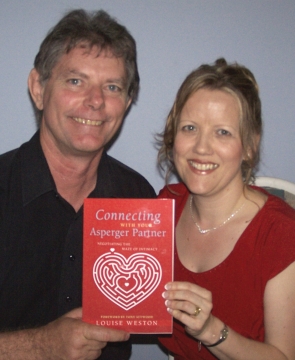
“There is lots of information in the book, and I really hope that people take that on board, but to me, what is more important is that they gain an understanding of, and an insight into life with Asperger Syndrome. If you understand someone with Asperger Syndrome, then knowing that it is named after Hans Asperger is redundant. While that sort of information might be interesting, it is far more useful to know how the person with Asperger Syndrome thinks: what he or she might find hard and why, what things might set them off, and what things will calm them down, what things they will be really good at, and what things they might struggle at.”
“It is important for children to participate in ‘activities of daily living’ which are essential for good health. The more he is involved in the process and has some sense of control, the less he will see it as a chore and the more he will be willing to participate… When approaching these activities, parents need to ask themselves what they are attempting to accomplish. For example, if the goal is for the child to be clean, then does it really matter if bath time is 7PM or 3PM, as long as the time fits with the flow of the family?”