Street-Based or Detached Youth Work: What it looks like, and why it matters
By Vanessa Rogers, youth worker and author of 101 Things to Do on the Street: Games and Resources for Detached, Outreach and Street-Based Youth Work.…

By Vanessa Rogers, youth worker and author of 101 Things to Do on the Street: Games and Resources for Detached, Outreach and Street-Based Youth Work.…

“Parents felt that, with a few exceptions, social workers did not and could not understand what it was like for them as parents of children growing up in care. There was stigma to bear as well as the emotional loss. In contrast, social workers talked of being aware of the parents’ distress and loss, but often not having the time to see parents, because they were focussing on work with and for the child, or simply not knowing how to help parents.”
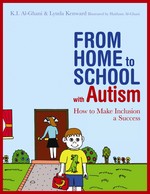
“Children with ASD are not good at generalising. They cannot transfer knowledge from one situation to another. Something as simple as having a different symbol to show ‘choosing’ for example, may result in the child being unable to understand what is expected. Not all schools have access to symbol writing programmes or they may be different from those used by early years practitioners. Parents usually have no access at all and are not even aware of the visual symbols they could be using to aid their child’s understanding at home…The aim of the book is to promote and foster collaboration between the home and the school. This will result in improved generalisation of skills and opportunities to exchange ideas and to decide what methodology works best for the child.”
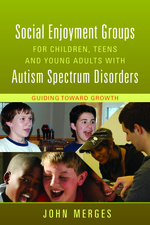
In December, JKP author John Merges shared some thoughts about his passion: helping young people on the autism spectrum enjoy social interactions – an important skill…
“Finding out about something as important and life-changing as your parent’s AS has the potential to overwhelm…I think using comics and graphic formats when talking about things to do with behaviour, health or illness can help integrate the very dense, sometimes technical and “clinical” information into the practical, emotional and deeply personal side of the issues.”

“Social enjoyment, as both an important life and employment skill, needs to be taught and practiced as early as possible. We need to provide our young people with safe, predictable situations to practice enjoying a social interaction. The successes I’ve seen in my own work demonstrate that social enjoyment is indeed a skill – and thus, can be learned.”

“True empathy is part of a very genuine understanding of the other person. And we learn this through dramatic playing which we can observe in the first few hours after a baby is born: they will try to imitate the expression on the mothers face…the baby is responding as if they are the mother; this ‘dramatic response’ continues to develop in those early weeks and months, like a life rehearsal for the development of empathy.”
By Gill D. Ansell, author of Working with Asperger Syndrome in the Classroom: An Insider’s Guide Being a Teaching Assistant is not what it once…

Tonight BBC Three will screen the documentary ‘Can’t Bully Me’ about the important work of the charity Red Balloon, which runs a network of schools that cater exclusively for…

“Anyone can benefit by telling their story and being heard, whether it’s through art, narrative, or other means of communication…Everyone has a story and all of these stories are sacred. There is healing and connection in telling these stories to someone who takes the time to listen. Art is a wonderful venue for telling these stories.”