When Toileting Isn’t About “Refusing”: Looking Beyond Behaviour
Laura Hellfeld is an independent Nurse and Sleep Consultant, an educator and advocate for the neurodivergent and disabled communities.
One of the most common things I hear from families is:
“They know what to do, they just won’t do it.”
Or:
“They’ll use the toilet at home but not at school.”
Or even:
“Everyone thinks they’re being stubborn.”
As a nurse working alongside families, school staff and other professionals, I’ve learnt that toileting is rarely that simple.
When a young person’s toileting doesn’t fit our expectations, it’s easy to see it as a behavioural issue. We might think they’re refusing, avoiding, or simply not trying hard enough. But in reality, toileting is one of the most complex everyday tasks young people learn to do.
Think about everything involved.
A young person needs to notice signals from inside their body, understand what those sensations mean, interrupt what they’re doing, transition to the bathroom, manage clothing, cope with the sensory environment, coordinate their body, communicate if they need help, and then return to whatever they were doing.
That’s a remarkable amount of skill for what often gets considered a “simple” task.
For many disabled and neurodivergent young people, one or more of these steps can become a genuine barrier.
Sensory processing is one example.
Some children find the sound of a toilet flushing physically painful. Others are overwhelmed by hand dryers, bright fluorescent lights, strong cleaning smells or the echo of public bathrooms. Some seek extra movement and don’t notice the subtle body signals that tell them they need the toilet until the urge becomes overwhelming. Others experience internal sensations so intensely that they feel frightening or unpredictable.
These are real sensory experiences that influence how safe, comfortable and manageable toileting feels.
Interoception (the ability to notice and interpret what’s happening inside our bodies) is another important piece of the puzzle. Some young people may not recognise that they need the toilet until the very last moment. Others may struggle to tell the difference between needing a wee, needing a poo, feeling hungry or experiencing anxiety.
The same is true for motor skills. Sitting steadily on a toilet, balancing while managing clothing, wiping effectively or climbing onto an adult-sized toilet all require coordination and strength that we often take for granted.
Then there are routines, predictability and emotional safety.
Many young people develop very specific toileting routines because familiarity helps them feel secure. A different bathroom, a new school, unfamiliar smells or changes in routine can suddenly make toileting feel impossible, even when they were previously managing.
When we begin asking, “What might be making this difficult?” instead of “Why won’t they do it?”, everything changes.
- Instead of rewards and consequences, we start identifying barriers.
- Instead of pressure, we build understanding.
- Instead of expecting children to fit the environment, we adapt the environment to better support them.
Sometimes, small adjustments can make a big difference: softer lighting, a footstool, ear defenders, a visual routine, more privacy, different clothing or ensuring the young person has the time they need without being rushed.
Other times, families need more support to understand the many factors that can influence toileting. Exploring these factors together helps families and professionals find strategies that work for that young person.
Every young person deserves toileting support that starts with curiosity rather than judgement.
Because toileting isn’t just about using the toilet.
It’s about comfort, dignity and feeling understood.
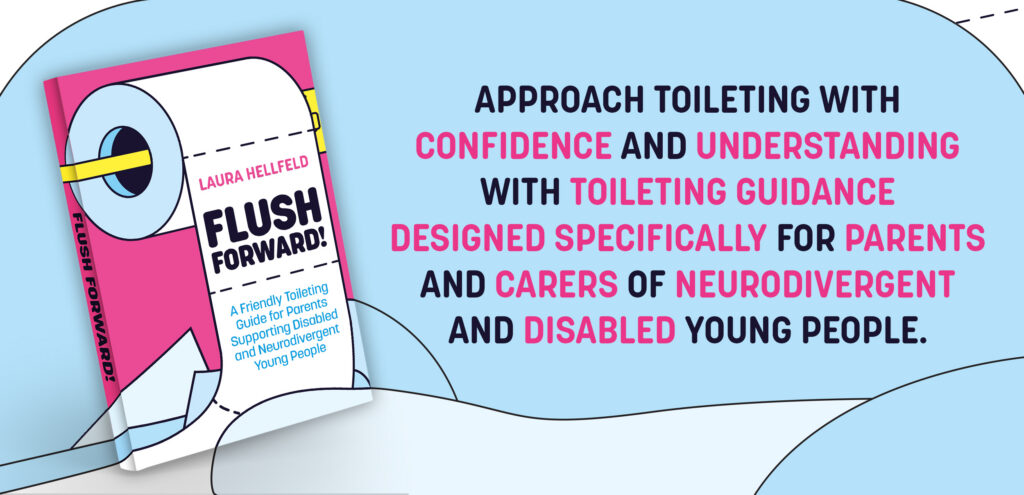
These are the conversations I wanted to open in Flush Forward!. Rather than focusing on quick fixes or one-size-fits-all advice, the book explores the many reasons why toileting can be difficult. It also offers practical, compassionate strategies that families and professionals can use together.
When we see toileting as a skill that develops differently for every person, we create space for real support.