Safeguarding Refugee, Asylum Seeking and Trafficked Children in the UK – An Interview with Emma Kelly and Farhat Bokhari

“Given the range of experiences that separated children are likely to have had before they arrive in the UK, it seems extraordinary that many will receive a lesser service from statutory services than citizen children. But, as our book shows, those working with separated children have long noted institutional discrimination. Much of this stems from the tensions that exist between immigration control and child welfare and safeguarding. Despite clear domestic policy and procedures, as well as international obligations, many separated children continue to find that their status as subject to immigration control takes precedence over their needs and rights as children.”
Compassionate care through touch – An interview with Niamh van Meines

“Touch is one of the most fundamental ways to offer support and caring and is often underestimated or disregarded in healthcare settings… A hand massage is a wonderful, easy introduction to using touch. From a caregiver’s perspective, they often feel disconnected from the person who is ill or weary of touching them, so it’s a wonderful way to approach the ill person and provide care in a manner that is satisfying to the ill person and to the caregiver, and safe.”

Touch as a way to share the radiant energy of care

“It was an exciting time, because it felt like a real movement in personal well-being was taking place. It wasn’t being led by doctors, but by ordinary people who were looking for more than symptom relief. They wanted therapies that were natural and non-toxic, and a way to be involved in the healing process. That was a key—becoming an active participant in wellness and illness instead of being a passive recipient of care. The quest for ways to be involved in the healing process, and for tangible ways to share it, became the continuing thread of my studies, writing and teaching.”

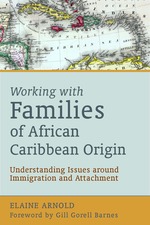
Breaking the intergenerational cycle of insecure attachment in families of African Caribbean Origin

“The intergenerational nature of poor attachment can be a unending cycle if there is no intervention to help bring understanding of it. Children whose educational attainment is low very often are avoidant of their teachers, as they are of parents with whom they do not have secure attachment, and so they pay little attention to the teacher or become disruptive which often leads to exclusion.”

Using solution focused approaches to connect with young service users with behavioural difficulties

“When we begin our work with children, young people and their families we work towards establishing what their goals for the work would be by asking such a question as: ‘How will you know that the work of The Junction has been helpful?’ Inevitably there are times when a young person will make reference to no longer needing to come to the service. Whilst this could be construed as a negative comment it is clearly understandable. Furthermore, it enables us to ask questions that appropriately place responsibility on the young person: What needs to happen? What do you need to do differently? What do you need to demonstrate to others for them (professionals) to be confident that you no longer need to come?”

The rebirth of Ritual Theatre as a potent healing force – An Interview with Claire Schrader

“…the book is about how ritual theatre can be expressed in a contemporary way that fits in with the way our lives are. People are hungering for this because the technological age is making us more and more disconnected, more in our heads and this is producing tremendous suffering under the labels of stress, fatigue and health problems. Ritual theatre along with the Arts Therapies counteract this. So the book includes ways in which ritual theatre is being brought into hospitals, institutions and work with marginal groups as well as to the general public.”

Using creative activities to help young people achieve their therapeutic goals and build a positive self-concept

“I think the most common problem I encounter with the students I work with is defiance – not doing what is asked of them in the classroom setting. However, after working with the student and finding out more about him, there are almost always other issues that are impacting the student and influencing his behavior. He may be behind his peers academically and feel embarrassed in the classroom… She may not have a consistent place to live or not know where her next meal is coming from each day. Arts-based activities provide students with a safe outlet to discuss these issues and allow the student and counselor to identify ways to handle them.”

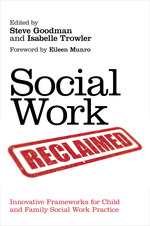
An Interview with Steve Goodman and Isabelle Trowler, co-founders of the pioneering Reclaiming Social Work (RSW) model

“Essentially, RSW frees up social workers to work alongside families to help them change, taking much of the bureaucracy away from social workers. It also acknowledges what a difficult job child and family social work is, particularly in local authority child protection contexts. The Social Work Unit, led by a Consultant Social Worker, brings together a small group of staff to work with families, bringing a range of perspectives and skills to bear on the complex work that needs to be done. It ensures faster work that is more reflective, evidence-based and expert, which achieves good outcomes for children.”