‘Exhaling Beauty’ – JKP authors host a special evening to celebrate females on the autism spectrum
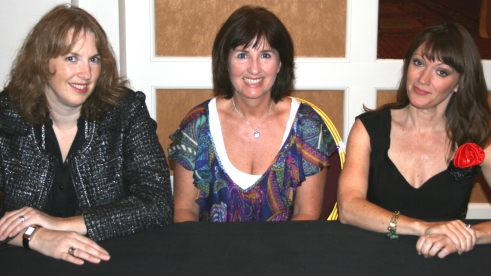
Several months ago, JKP authors Shana Nichols, Rudy Simone and me – Liane Holliday Willey – decided it would be lovely to host a special evening…
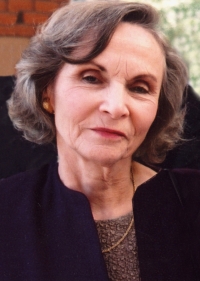
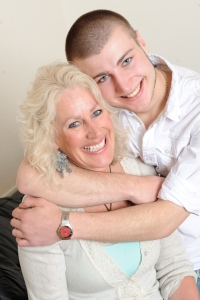
Grandparents’ Day in the UK on Sunday, October third, should be a day to toast all grandparents who help with their grandchildren. But the grandparents…
We’re very pleased to announce that JKP author Jan Greenman will be launching her book, Life at the Edge and Beyond, on Saturday, 14th November at…
Listen to this morning’s interview on BBC Somerset with JKP author Richard Hanks about his new book Common SENse for the Inclusive Classroom. [Scroll through the audio…
“Most of the methods used in changing challenging behaviours contain a degree of force or lack of respect for the choices of the service-user. My main principle is that the service-user always has the right to say ‘no’. My job is to encourage her say ‘yes’. That means that if she says ‘no’, I need to figure out what I did wrong. In that way I actually can change her behaviour by focusing on my own behaviour, not on hers.”
Richard Hanks is a former Headteacher and has extensive experience of working with children with special needs. Here, he answers some questions about his new…
“Whilst the books are driven by a vision of what the educational experience of students should be, they are also driven by an evidence based analysis of what we actually know about the actual day to day experience of students and their educators.”
“The history of educational policy ‘innovation’ tells us that the most vulnerable and at risk pupils are often ignored or, at best dealt with as an afterthought.”
“It is probably wise to recognise the possibility that SEBD are not only encountered in the classroom – staffrooms have their fair share…”
“It is easy to be fooled by the apparently dismissive attitude that some young people show towards to school. It may be the case that for many students school is, indeed, ‘boring’ but this does not mean that it is unimportant to them. On the contrary, the school is the main site where young people establish their independent identities outside the family unit. From their earliest experiences of schooling, children are engaging with a key social institution as individuals in their own right. Whether they see themselves as succeeding or failing, socially and academically, they cannot escape the impact of these experiences on their developing identities. Relationships with teachers are central to this identity formation process.”