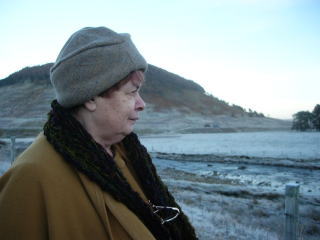
Linda Woodcock on Managing Meltdowns
“The low arousal approach is based on three assumptions, firstly that most individuals who are distressed are extremely aroused at the time, therefore we should avoid doing anything to make it worse…”

“The low arousal approach is based on three assumptions, firstly that most individuals who are distressed are extremely aroused at the time, therefore we should avoid doing anything to make it worse…”

“Our attachment history affects us all, and children who have had sub-optimal early care are likely to be anxiously attached and to carry this anxiety as a self-fulfilling prophecy into other relationships, developing behavioural coping mechanisms that may make them difficult to care for. If the caregiver is also frightening, the child cannot organize their coping strategy in a coherent way. Such a child presents a huge challenge to be adequately cared for. Understanding attachment allows professionals charged with this task to unpack the child’s adjustment and work out ways of responding to the child that answers their attachment need and switches of the child’s self-defeating behaviours.”

“One of the great things about current times is that communication is so much easier, if we just use it. […] A teacher can email a homework assignment home, or send early warning that there will be a different teacher taking a class the next day. AS may involve a communication difficulty, but the technology is there now to help overcome it.”

“…practitioners need to ensure they do not hide behind protocols and prescriptive techniques in order to create an authentic human relationship in which to truly understand their client and undo the dehumanisation inherent in interpersonal abuse.”
JKP first published Ann Cattanach’s work in the early 1990’s, by which time she was an established play therapist, confident in her ability to help…

“I think it is important for newly-qualified social workers to understand that they won’t be able to develop a successful and satisfying career, in which they can make a sustained and positive contribution to the well-being of the children and families they are working with, unless they make sure that they look after themselves.”

“…the preoccupation with ‘youth’ is at the expense of ‘justice’. Too readily such systems exist or at least function so as to punish and to challenge individual young people rather than to question the extent to which the wider society is as much, if not more, to blame for the disadvantages they face.”

“I am always inspired by my patients and their families and how they cope and bravely make the best lives they can for themselves. I keep my desire to help alive by the strength and altruism of the people I have gotten to know through this work. I truly love my work and feel lucky to be asked to help in this incredible challenge of our age.”

“For me the biggest challenge is recognising effective practice and, in the same way that we have begun to pay more attention to resilience amongst children and young people, we should be considering what makes for a resilient workforce. Why is it that some practitioners can continue to work effectively with service users when others in the same or similar settings struggle?”

“The 5p Approach evolved over several years as a result of my work as a psychologist within schools. I grew increasingly concerned that I was often called in to deal with behaviour difficulties after the event, when a better understanding of autism and the reasons for the behaviour occurring could have prevented many problems arising in the first place…”