British Medical Association (BMA) Honours Three JKP Titles at 2011 Book Awards
We were so thrilled that three JKP titles were honoured at the prestigious 2011 BMA Medical Book Awards, which took place on Wednesday, 14th September at BMA House in…

We were so thrilled that three JKP titles were honoured at the prestigious 2011 BMA Medical Book Awards, which took place on Wednesday, 14th September at BMA House in…

“…one of my favorite games [in the book] is ‘Contemporary Music or Drawing Music’ (activity #80, page 103) because I was told not to use this game with children with differentiated capacities or in mainstream classes because it would lead to failure: ‘Children in special education and elementary school children cannot compose,’ I was told. Well I can tell you this is not true. I was amazed to see the creativity of some of the children, while all came up with something different and interesting; some compositions were quite beautiful. One should never underestimate the capabilities of children with special needs and their creativity.”
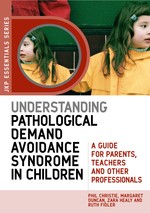
“Many parents tell us that they have struggled to find a diagnosis that ‘makes sense’ of their child’s development and behaviour. Often they have read the descriptions of PDA and comment on how it is ‘like reading my child’s life story’. These parents don’t just want a label for their child – although they are often criticised for just that – but they want a way of understanding him or her. With understanding, they can then move forward knowing the best ways in which to manage their children, encourage them to be less anxious and reduce some of the outbursts that are having an impact on all of the family.”

Last April, JKP celebrated World Autism Awareness Day 2011 at the V&A Museum of Childhood’s special autism event and exhibition. The highlight of this special day was a reading…

“Non-compliance might be due to not understanding what’s been asked and not knowing how to ask for clarification. What might be seen as a refusal to explain might be due to difficulties constructing coherent narratives. Conflict resolution and negotiation require high-level language skills and if these are lacking, then aggression can result. If adults do not recognise the underlying communication problems, the children and young people who experience them can be misunderstood and even misdiagnosed.”

“I have so many memorable experiences of using Developmental Drama: Someone’s face full of laughter and sheer joy when their name is ‘drummed’ to a climax in the warm-up…The sudden, unexpected and totally right response to a new event in the story…A whole group of children with multi-sensory impairment huddled together, looking upwards in wonder at a new and bright ‘hole in the sky!’ It goes on and on. I am a very lucky person.”

By Andrew Nelson, author of Foundation Role Plays for Autism: Role Plays for Working with Individuals with Autism Spectrum Disorders, Parents, Peers, Teachers, and Other…
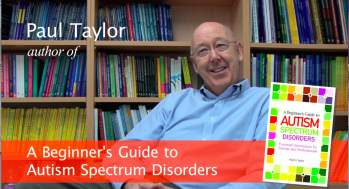
Dr Paul Taylor is an experienced consultant paediatrician working in a regional general hospital in New Zealand. He specializes in Autism Spectrum Disorder (ASD), working…

This Spring, JKP author Mary Mountstephen was invited to Singapore and Malaysia to give a presentation based on her book, How to Detect Developmental Delay…

“…I just could not believe how much information I had to read through to gain useful approaches for working with children in the education setting. I just knew that during my time as a classroom teacher I would never have had the luxury of completing this much reading for just one of my students and I became determined to distil down what I had learnt into a quick access guide for teachers.”