The Power of the Breath
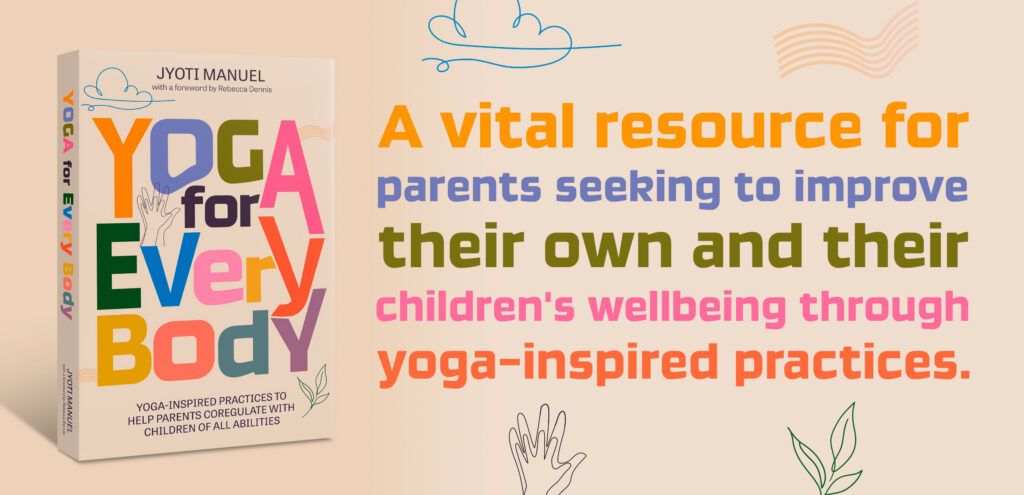
Written by Jyoti Manuel. Her book, Yoga for Every Body: Yoga-inspired practices to help parents coregulate with children of all abilities is available to pre-order now.
Did you know how powerful your breath can be?
Our breath is one of the simplest tools we have for helping the body and nervous system feel more settled. And the beautiful thing is that it is always with us. We don’t have to find it, buy it or carry it around.
It doesn’t ask us to get anything right. It doesn’t tell us what to do. It simply stays with us, quietly waiting for us to notice it.
For children with special educational needs, this can be especially valuable.
Many children experience the world very intensely. Sounds, lights, touch, movement, changes in routine, communication difficulties and unfamiliar environments can all affect how safe or settled they feel. Sometimes their nervous system becomes overwhelmed before they have the words or ability to explain what is happening.
We may then see what looks like challenging behaviour.
A child may become very active, distressed, withdrawn, noisy, quiet, upset or unable to engage. They may need to move, make sounds, avoid eye contact or get away from what is happening around them.
These are often ways of communicating.
The child may be saying through their body and behaviour, “This is too much for me right now.”
This is why regulation begins with the body.
Rather than asking a child to simply calm down, we can help their nervous system experience more safety through our own presence.
I have seen, over and over again, the difference it can make when a child’s primary caregiver becomes more regulated. When we slow down, soften our body, breathe more fully and become more present, the child can often sense the change.
We don’t have to say, “Calm down.”
We can become the calm.
Children often borrow our regulation before they are able to find their own. Our nervous systems are communicating constantly, through the way we breathe, move, speak and hold ourselves. We can send messages of safety without saying a word.
And this brings us back to the breath.
One of the most beautiful ways to explore the breath with children is through sound.
You don’t necessarily need to ask a child to sit still and take a deep breath. For some children, that may feel uncomfortable or simply be too difficult.
Instead, we can make a sound together.
Humming is an ancient yogic practice, and many children naturally enjoy it. It is simple, playful and doesn’t require complicated instructions. You can hum a little tune, make a long “mmmmmm” sound, hum together or experiment with different sounds to discover what the child enjoys.
There is no right or wrong way to do it.
When we hum, we naturally extend the out-breath. We breathe in, and the sound encourages us to breathe out slowly and steadily.
The out-breath is associated with the part of our nervous system involved in rest, recovery and digestion. Gently extending it can give the body an opportunity to slow down.
Humming also creates a gentle vibration around the face, throat and chest. For some children, this can feel soothing and support their awareness of their body.
It can become a wonderfully simple sensory and regulatory practice.
You might sit beside a child and hum softly. You might hum while rocking or walking. You might hum during a cuddle, if the child enjoys touch. Or you might simply make a little humming sound and wait to see what happens.
The most important thing is connection rather than correction.
We are not trying to make a child breathe in a particular way, sit still or behave differently.
We are offering an experience.
We are saying, through our body:
“I am here.”
“You are not alone.”
“There is no rush.”
“We can breathe together.”
And sometimes, that is enough.
Every child is different, of course. What feels regulating for one child may feel uncomfortable or overwhelming for another. Some children may love humming; others may dislike it. Some may enjoy a very soft sound, while another may prefer a louder or deeper vibration.
So we follow the child.
We watch their body. We notice their breathing, movement, facial expression and engagement. We listen.
The breath is not something we impose upon a child. It is something we gently invite them into.
Perhaps one of the greatest gifts we can give our children is not simply teaching them how to regulate themselves, but helping them experience what regulation feels like in relationship with another safe person.
Our breath is with us every moment of every day.
It can become an anchor. A rhythm. A place to return to.
And when we learn to use our own breath with awareness, we give ourselves another way of saying to our child:
“I am here with you.”
“We can slow down together.”
“You are safe to be exactly where you are.”
The breath is always there, patiently waiting.
And sometimes, the most powerful thing we can do for ourselves and our children is simply to stop, breathe, and let them feel that we are truly there with them.
Jyoti Jo Manuel runs Special Yoga (https://www.specialyoga.co.uk), a leading UK-based provider of yoga programmes tailored for children with diverse needs. Jyoti also has lived experience as a parent. Her book, Yoga for Every Body, publishes on 21st December 2026 and is available to pre-order now.