Why Emotional Vocabulary Matters for Regulation: Helping Children Understand Their ‘Feelings Furballs’
By Lynn How. Buy here book, The Feelings Furballs, here.
When children are overwhelmed, dysregulated, anxious, angry, or emotionally flooded, adults often focus on behaviour first.
But behaviour is communication.
Behind many behaviours is a child who simply does not yet have the language to explain what is happening inside them.
Many children genuinely cannot identify or explain their emotions in the moment. Others may feel emotions so intensely that words disappear completely. Some children have never been explicitly taught emotional vocabulary at all.
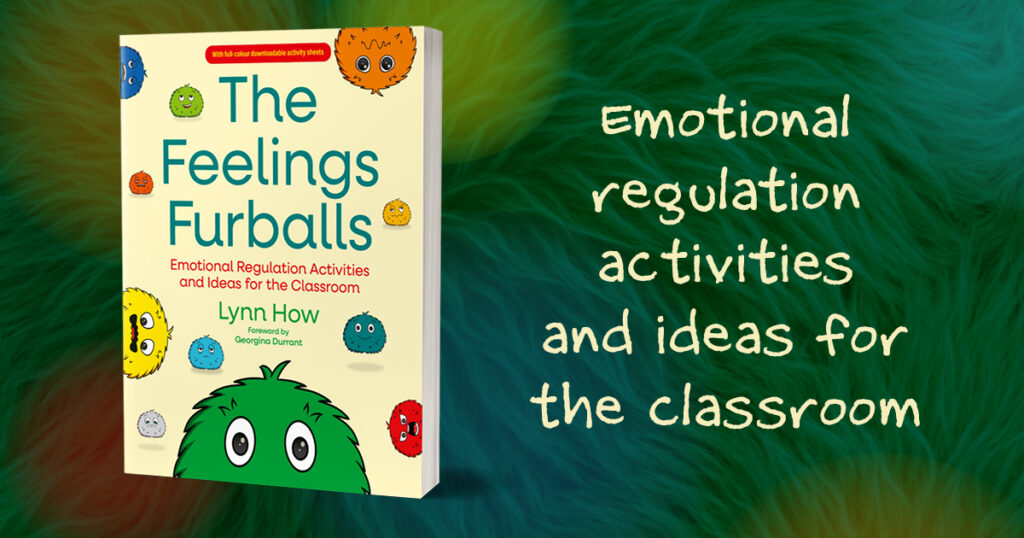
This is one of the reasons I wrote Feelings Furballs.
The idea behind the Furballs is simple: emotions can sometimes feel messy, noisy, confusing, tangled up, or difficult to control. Giving children a visual and concrete way to think about emotions can help them begin to notice, name, and manage what is happening inside them.
Because regulation starts with awareness.
In schools and homes, we sometimes unintentionally expect children to regulate emotions they cannot yet identify.
We might say:
- ‘Use your words.’
- ‘Calm down.’
- ‘Talk to me.’
- ‘Make a better choice.’
But many children do not yet have the emotional vocabulary or emotional literacy skills to do this independently.
Some children only know a handful of emotional words such as happy, sad and angry, yet human emotions are far more complex than that.
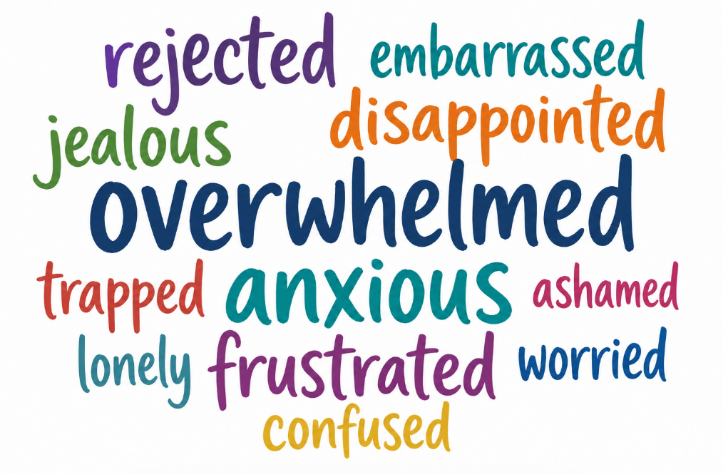
A child might actually be feeling:
- rejected
- embarrassed
- overwhelmed
- disappointed
- anxious
- jealous
- worried
- trapped
- ashamed
- lonely
- confused
- frustrated

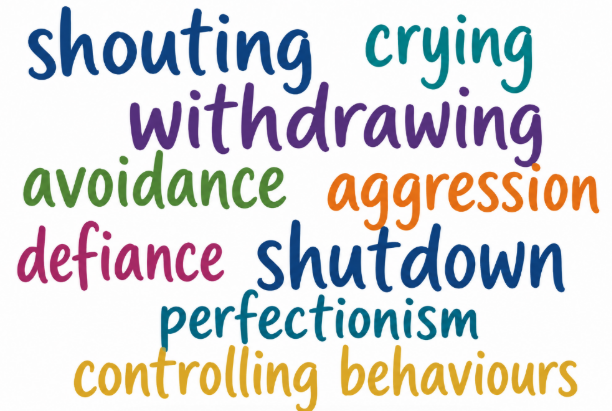
When children cannot accurately identify feelings, those emotions often come out physically instead. We may see for example,
- shouting
- crying
- withdrawing
- avoidance
- aggression
- defiance
- shutdown
- perfectionism
- controlling behaviours
The behaviour is visible. The feeling underneath often is not.
Some children struggle more than others
This is particularly important for children with:
- ADHD
- autism
- speech, language and communication needs
- developmental trauma
- sensory processing differences
- anxiety
- attachment difficulties
Many of these children experience emotions intensely, but struggle to process, organise, describe, or communicate them clearly in the moment.
Some children also become stuck in survival mode. When the nervous system feels unsafe, the thinking part of the brain becomes harder to access. That means emotional language may disappear exactly when it is needed most.
This is why emotional regulation cannot simply be taught through punishment, consequences, or repeated reminders to ‘make good choices’.
Children need support, modelling, repetition, safety, and language.
Emotional vocabulary should be taught proactively
One of the biggest misconceptions around emotional regulation is that we only talk about feelings when a child is already dysregulated. But the best emotional literacy work happens before the meltdown.
It happens:
- during stories
- during play
- through visuals
- through modelling
- during calm moments
- through discussion
- through reflection
- through curiosity rather than judgement
This is where creative tools can help enormously.
Characters, metaphors, visuals, and storytelling often feel safer for children than direct questioning.
A child may struggle to say: ‘I feel overwhelmed and anxious.’
But they may be able to say: ‘I feel like the red furball today, all tangled up.’
That small shift matters.
Naming feelings reduces shame
Many children grow up believing emotions are ‘bad’, especially emotions like anger, fear, jealousy, or sadness. Adults sometimes accidentally reinforce this by responding differently to certain emotions:
- happiness is welcomed
- anger is punished
- worry is dismissed
- sadness is rushed away
I am guilty of this in my own parenting! But emotions themselves are not bad, they are information. Children and adults alike, need to learn that all feelings are acceptable, even when certain behaviours are not.
When we help children name emotions calmly and without shame, we help them:
- feel understood
- develop self-awareness
- build emotional safety
- improve communication
- reduce emotional overload
- begin learning regulation strategies
Often, being understood is the first step towards calming down.
Emotional regulation is a long-term skill
There is no quick fix for emotional regulation.
It develops over years through:
- relationships
- co-regulation
- modelling
- repeated experiences
- nervous system safety
- language development
- emotional understanding
Many adults are still learning emotional vocabulary themselves and also healing from their own attachment patterns and developing growth of nervous systems conditioned at an early age. Myself included!
Children do not need perfection from us. They need emotionally available adults who are willing to help them make sense of their inner world. That is my mission behind my Feelings Furballs.
The book and accompanying resources, was designed to help children explore emotions in a gentle, accessible, and non-threatening way, while also giving adults opportunities to open up meaningful conversations around feelings, regulation, and emotional wellbeing.
I strongly believe, the biggest change in becoming emotionally regulated adults, starts with helping children name and understand their feelings.
Lynn How has 24 years of primary teaching SLT and SENCo experience. She holds an MA in Education, NASENCO, and NPQH and specialises in wellbeing, SEND, children’s mental health, leadership, and mentoring. Her popular wellbeing blog can be found at www.positiveyoungmind.com
Her book, The Feelings Furballs, is out now.