Book cover: Making Partnerships with Service Users and Advocacy Groups Work

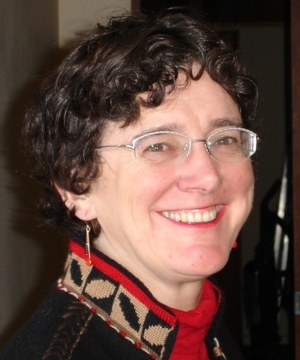
‘Growing spaces’ as a way of understanding and developing genuine partnerships – An Interview with Jackie Martin and Julie Gosling

“I think that service users can give a perspective which can be lost without their inclusion. Service users can help to cut through some of the professional ‘jargon’ which excludes people, even other professionals sometimes. Professionals are often under considerable pressures to meet targets or stay within budgets, and even with the best will in the world they can start to lose sight of why they came into the profession in the first place. Service users can help to keep that perspective and keep values sharp.”

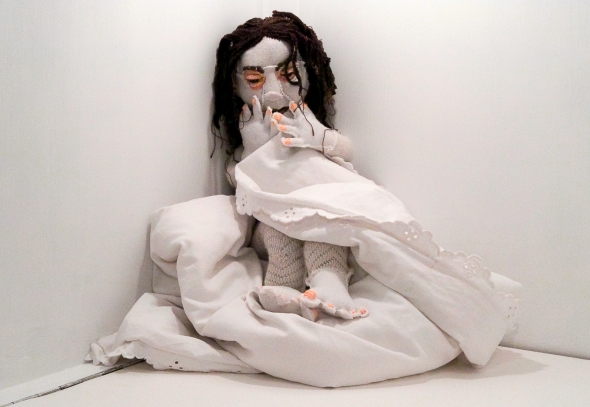
Photo: "Buba" by textile artist Neta Amir

Using Textile Arts and Handcrafts in Therapy with Women – An Interview with Ann Futterman Collier

“Ironically, as my fibre-making skills developed, my clinical skills also developed. I became better at creating relationships and more and more comfortable with using textile as an entryway to connect with women whom I didn’t know. At some point, it became obvious to me that making textiles and clinical psychology didn’t need to be two separate compartments in my life: I realized that I was already integrating the two.”

Living with Dementia: A journey to the inner self – An Interview with Christine Bryden

“When I first started, there was no support for people with dementia, as it was assumed we lacked insight. Indeed the words of an Annual Report in 2000 of an Alzheimer’s Association spoke of us as being “mindless empty shells”. At first when I spoke up, people did not believe I had dementia because I could still speak. They said that even if I was showing the early signs, I was not a credible representative of people with dementia because of my level of function. Yet since then I have met so many others who have this diagnosis who are speaking out… We are receiving so much support and encouragement, and we are being listened to and respected. By treating us as experts in what it feels like to have a diagnosis of dementia, services and support are being much improved.”
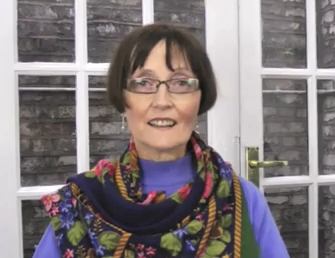
Dramatherapy and Family Therapy: Essential Pieces of the Multi-Agency Jigsaw in Education – An Interview with Penny McFarlane and Jenny Harvey

“…historically, the intervention for children with emotional and behavioural difficulties has generally been based on behaviour improvement on a cognitive level rather than looking at the meaning behind the behaviour. For a school to accept that a deeper understanding and interpretation of behavioural difficulties is necessary to meet a child’s needs on a sustainable level is a big leap of faith. Therapy is about change and the capacity to maintain changes, and this book can help allay the fears that prevent schools from embracing this mode of intervention.”

My Journal Journey – An Article by Kate Thompson, author of Therapeutic Journal Writing

“I wrote this book because this was a book I would have liked when I was training as a counsellor. At that time I had no idea that you could (‘were allowed to’) use journal writing as a therapeutic medium with clients. But I did know that it worked for me so it seemed natural to want to try. This book would have legitimized my instincts and given me the confidence to do it openly.”

Responding to young people who self-harm with concern, care and compassion – An Interview with Steven Walker

“The problem with self-harm and suicidal behaviour is that it is easily hidden, carries considerable stigma and is misunderstood by many professional staff. Evidence suggests that it is increasing as a generation of young people are exposed to a harsh economic and social climate, competition for higher education and skills training, and increases in poverty, unemployment and parents under considerable stress. Young people find ways of coping in these circumstances and self-harm is a strategy many are using to cope with feelings of anger, despair and hopelessness.”

“Suicide is not a problem that can be tackled alone – but it can be tackled.” – An Interview with David Aldridge and Sergio Pérez Barrero

“What we offer is a model to show how problems escalate and how these problems are connected to relational contexts. We are encouraging people, particularly professionals, to communicate with each other and to look at the bigger picture. This is not a problem that can be tackled alone – but it can be tackled. To do so, we have to talk to each other. As professionals, we also need to collaborate more on combating mental health problems. This is an educational process, heightening awareness of how depression manifests itself but also removing the stigma of mental health.”

Yoga breathing techniques to help children deal with anger and stress – An Interview with Michael Chissick

“Looking back I think that one of the main factors that inspired me to turn the yoga play into a book was the feedback from the children. I have lost count of the amount of times that children would tell me how they had used the techniques to deal with incidents in their lives. Problems ranging from being angry at siblings who stole their sweets or broke their toys, to being the calming influence in big family arguments. My two favourites will always be: the nine-year old boy who was terrified of the dentist and who quietly sat in the waiting room, and ultimately the dentist’s chair, practising his Crocodile Breath to calm himself; and the ten year old girl, who was angry with her parents, who would go to her room and practice Woodchopper Breath every day for three weeks, who eventually came and told the class teacher and me that that she had Haaaa’d out her anger.”