Breaking Bad Habits in Communication for the Helping Professions
By Maggie Kindred and Michael Kindred, authors of the new book 500 Tips for Communicating with the Public, which addresses the communication challenges that people…
By Maggie Kindred and Michael Kindred, authors of the new book 500 Tips for Communicating with the Public, which addresses the communication challenges that people…

By Vanessa Rogers, youth worker and author of 101 Things to Do on the Street: Games and Resources for Detached, Outreach and Street-Based Youth Work.…
“Parents felt that, with a few exceptions, social workers did not and could not understand what it was like for them as parents of children growing up in care. There was stigma to bear as well as the emotional loss. In contrast, social workers talked of being aware of the parents’ distress and loss, but often not having the time to see parents, because they were focussing on work with and for the child, or simply not knowing how to help parents.”

By Richard Bryant-Jefferies, a former counsellor in the UK and author of the book Counselling the Person Beyond the Alcohol Problem. I have become increasingly concerned…
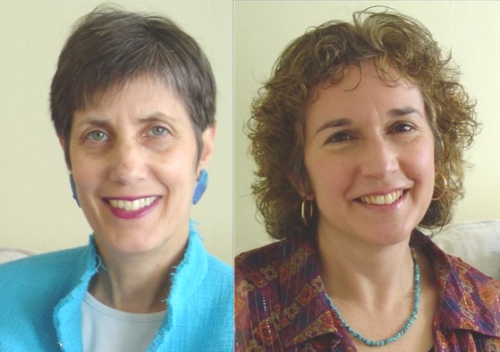
By Caroline Schuck and Jane Wood, authors of the forthcoming book Inspiring Creative Supervision. Creative supervision employs the use of a wide range of dynamic…
” I find that older people are often patronised, and their ability to recover and make changes in their lives is often not acknowledged. Dr Martin Blanchard speaks in the Foreword of a ‘therapeutic nihilism’ that exists in attitudes towards the client group described in the book. One effect of this is that older people are often expected to fit into generic treatment systems, when they clearly have needs that will not be met by those systems. Thus the need for a specialist approach such as the book describes.”
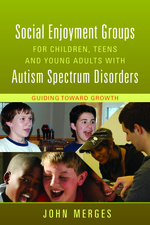
In December, JKP author John Merges shared some thoughts about his passion: helping young people on the autism spectrum enjoy social interactions – an important skill…
“Finding out about something as important and life-changing as your parent’s AS has the potential to overwhelm…I think using comics and graphic formats when talking about things to do with behaviour, health or illness can help integrate the very dense, sometimes technical and “clinical” information into the practical, emotional and deeply personal side of the issues.”

“Social enjoyment, as both an important life and employment skill, needs to be taught and practiced as early as possible. We need to provide our young people with safe, predictable situations to practice enjoying a social interaction. The successes I’ve seen in my own work demonstrate that social enjoyment is indeed a skill – and thus, can be learned.”
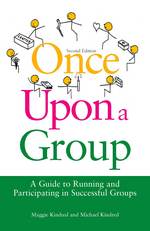
“We are in groups throughout life. Many different kinds of groups occur in social clubs, health and social care, industry, commerce, education, politics, churches, and voluntary organizations. People of all ages are involved, including small children. Most of them have no idea they are involved in ‘group processes’! Groups are natural, and usually get by without analyzing themselves. So why bother to spend time in training? … We have written this book because we believe that using a group isn’t mystical, but can be considerably more enjoyable and effective if members know a little about how groups function.”