Social Skills, Emotional Growth and Drama Therapy – An Interview with Dr Lee Chasen

“Drama and theatre has historically been portrayed as a mirror to the human condition, raising questions and reflecting aspects of how we understand and relate to ourselves and each other. By holding the mirror of drama up to the mirror of social skills building neuron activity, we illuminate previously obscured angles, empowering a practical as well as metaphorical peripheral vision of sorts.”

The Choices Game: Helping young people make positive choices and stay safe – An Interview with creator Christopher McMaster

“Sometimes we adults make the mistaken assumption that young people have acquired the skills they need to be safe, when these skills often need to be explicitly taught…Rather than hoping for the best, we can prepare our vulnerable youth as well as we can by familiarizing them with some of the risks they may encounter and teaching that they can make choices—empowering them to be able to say ‘No!’ or ‘Stop!'”

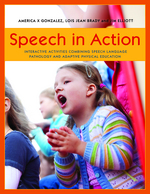
“I realized that I could help others find their voice” – An Interview with America X. Gonzalez, co-author of Speech in Action

“Speech in Action works well with children on the autism spectrum is because it is fun…If the student is bored out of his or her mind they won’t pay enough attention to learn anything. On the other hand, if they are actively engaged in a lesson they will pay enough attention to allow the information to enter their brains. They might need some repetition to completely learn the concept but since the activities are fun the kids beg us to do them all the time.”

Toward an independent lifestyle – Karra Barber talks about her new skill-building workbook for teens and young adults on the autism spectrum

“My son is seventeen and is approaching the age of maturity. In an effort to prepare him toward an independent lifestyle (his goal as well), I knew we needed to build his life and community skills. I wanted him to feel confident in everyday tasks such as buying food, returning an item at the store, going to the bank, washing clothes, using public transportation or making himself a meal…”

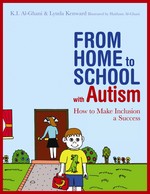
How to Make School Inclusion a Success for Children with Autism – An Interview with Kay Al-Ghani and Lynda Kenward

“Children with ASD are not good at generalising. They cannot transfer knowledge from one situation to another. Something as simple as having a different symbol to show ‘choosing’ for example, may result in the child being unable to understand what is expected. Not all schools have access to symbol writing programmes or they may be different from those used by early years practitioners. Parents usually have no access at all and are not even aware of the visual symbols they could be using to aid their child’s understanding at home…The aim of the book is to promote and foster collaboration between the home and the school. This will result in improved generalisation of skills and opportunities to exchange ideas and to decide what methodology works best for the child.”